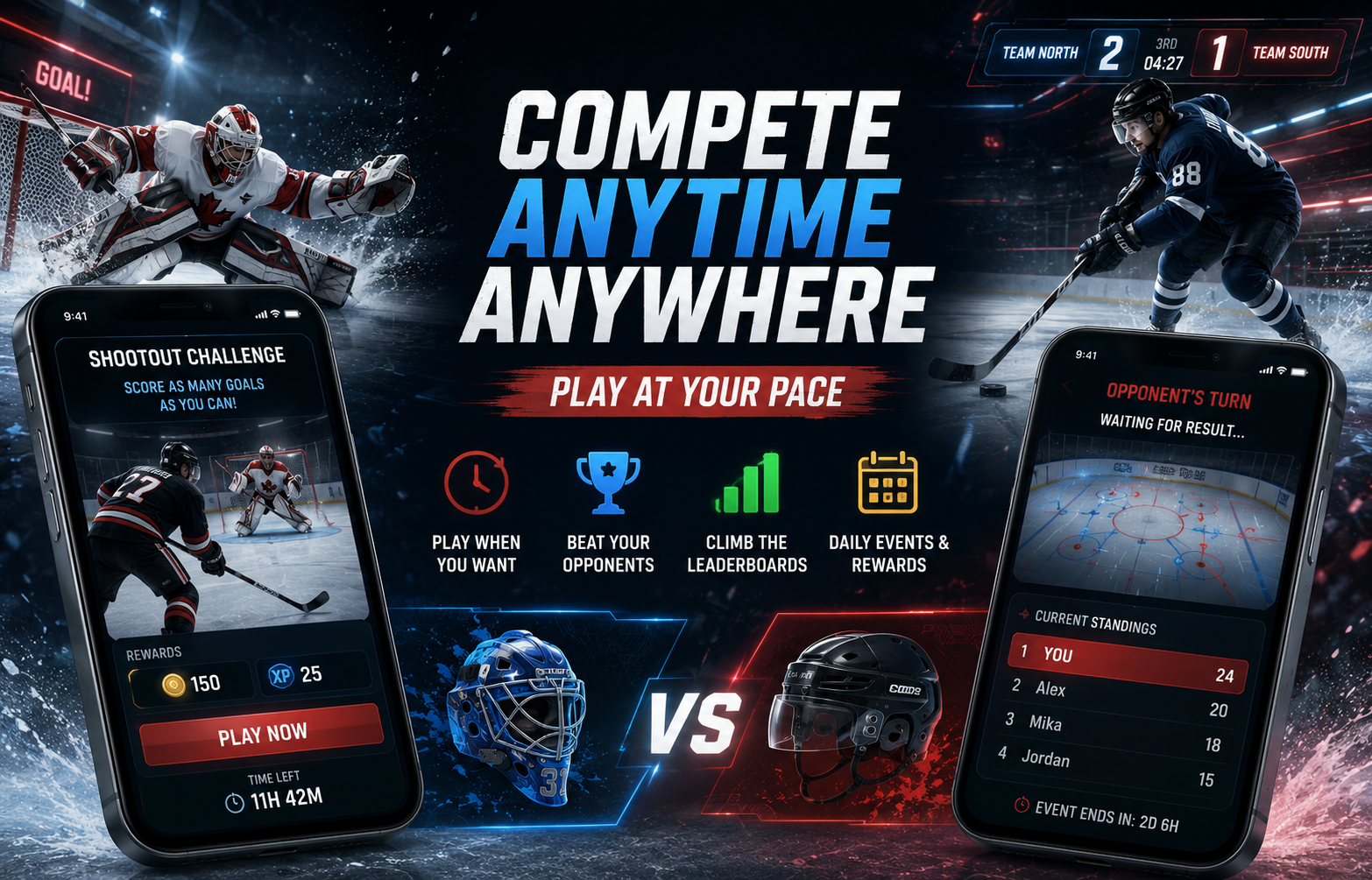
When people think about competitive hockey games, they usually imagine two players battling each other in real time. For years, live multiplayer was considered the ultimate competitive experience. However, mobile gaming has changed significantly, and developers are now embracing another format that better matches how people actually play on smartphones.
Asynchronous competition is becoming one of the fastest-growing features in mobile hockey games. Instead of requiring both players to be online at exactly the same moment, games allow users to complete their turns independently while still competing against one another. This approach offers greater flexibility without sacrificing the excitement of competition, making it especially attractive for modern mobile audiences.
Competing Without Matching Schedules
Real-time multiplayer works well when two players are available simultaneously. Unfortunately, this isn’t always practical. Players live in different countries, have different daily routines, and often play only during short breaks throughout the day.
Asynchronous competition removes this limitation. A player can complete a challenge during the morning commute, while an opponent responds hours later. Both participants remain engaged in the same competition without needing to coordinate their schedules.
Mobile Gaming Naturally Fits Flexible Competition
Unlike console gaming, mobile gaming is rarely planned in advance.
Most sessions happen during:
- coffee breaks;
- lunch hours;
- public transport;
- waiting rooms;
- evenings before bed.
Because of these unpredictable play patterns, asynchronous systems feel more natural than demanding immediate online matches. Players enjoy competitive gameplay without worrying about connection timing.
Skill Still Determines the Winner
One common misconception is that asynchronous competition is less competitive. In reality, many mobile hockey games carefully balance these systems to ensure results depend primarily on player performance. Competitors may receive identical scenarios, identical shot opportunities or identical gameplay conditions.
The player who performs more efficiently ultimately wins. This preserves fairness while allowing complete scheduling flexibility.
Reduced Waiting Means More Playing
Anyone who has played online multiplayer has experienced waiting.
- Searching for opponents.
- Loading matches.
- Handling disconnects.
- Waiting for matchmaking.
- Asynchronous gameplay eliminates much of this downtime.
Players simply enter a challenge, complete it, and continue with other activities while waiting for results. This creates much smoother gameplay sessions.
Better Connections Across Time Zones
Global mobile games attract players from every region. Real-time matchmaking across multiple time zones can become difficult during off-peak hours. Asynchronous competition solves this challenge naturally.
Someone in Canada can compete against another player in Sweden or Japan without either needing to adjust their schedule. This dramatically expands the available player pool.
Short Sessions Become More Rewarding
Many hockey fans only have a few minutes available each time they open a game. Traditional multiplayer sometimes requires committing to an entire match. Asynchronous formats work differently.
Players can complete:
- penalty shootout challenges;
- shooting accuracy events;
- goalie competitions;
- scoring contests;
- timed skill rounds.
Each activity lasts only a few minutes while still contributing toward meaningful competition.
Developers Can Introduce More Creative Events
Flexible competition allows developers to experiment with new event formats.
Examples include:
- weekly scoring championships;
- precision shooting contests;
- longest winning streaks;
- goalie reaction tournaments;
- national leaderboard events;
- special seasonal competitions.
Because every participant plays independently, organizers aren’t limited by simultaneous matchmaking requirements. This opens the door to far more creative competitive experiences.
Fairer Performance Comparisons
Many real-time matches are influenced by factors outside a player’s control.
These include:
- unstable internet;
- high latency;
- device performance;
- temporary connection issues.
Asynchronous events reduce many of these variables. Since players complete identical challenges independently, results often provide a more accurate comparison of individual skill.
Encouraging Daily Participation
Flexible competitions naturally support regular engagement. Players know they can enter an event whenever they have a few free minutes.
There’s no pressure to stay online waiting for opponents. Instead, participation becomes part of a daily routine. This consistency helps maintain active communities over much longer periods.
Leaderboards Become More Meaningful
Asynchronous systems pair naturally with ranking systems. Rather than tracking only wins and losses, games can compare:
| Ranking Metric | Competitive Value |
|---|---|
| Shot Accuracy | Precision |
| Save Percentage | Defensive Skill |
| Fastest Completion | Speed |
| Tournament Points | Overall Performance |
| Weekly Score | Consistency |
| Event Ranking | Seasonal Progress |
These rankings encourage continuous improvement while rewarding different playing styles.
Accessibility Improves for Every Player
Not every hockey fan enjoys high-pressure real-time competition. Some players prefer taking their time before making decisions. Others simply have inconsistent internet access.
Asynchronous gameplay makes competitive hockey more accessible by reducing technical barriers without removing the excitement of climbing rankings. This broader accessibility helps games attract a more diverse audience.
The Future of Mobile Hockey Competition
As mobile hardware continues improving, real-time multiplayer will remain an important part of hockey gaming. However, asynchronous competition is unlikely to disappear. Instead, both systems will continue working together.
Real-time matches will satisfy players looking for immediate action, while asynchronous competitions will provide greater flexibility, larger communities, and more creative tournament formats. The combination of both approaches creates a richer competitive ecosystem that better reflects how people actually use their smartphones.
Final Thoughts
Asynchronous competition is quietly becoming one of the smartest innovations in mobile hockey games. By removing scheduling barriers while preserving meaningful competition, developers are creating experiences that fit naturally into everyday life.
Players no longer need to choose between convenience and competitiveness. They can challenge opponents from around the world, participate in global events, improve their rankings, and enjoy skill-based hockey gameplay whenever they have time. As mobile gaming continues evolving, flexible competition systems are likely to become a defining feature of the next generation of hockey games.