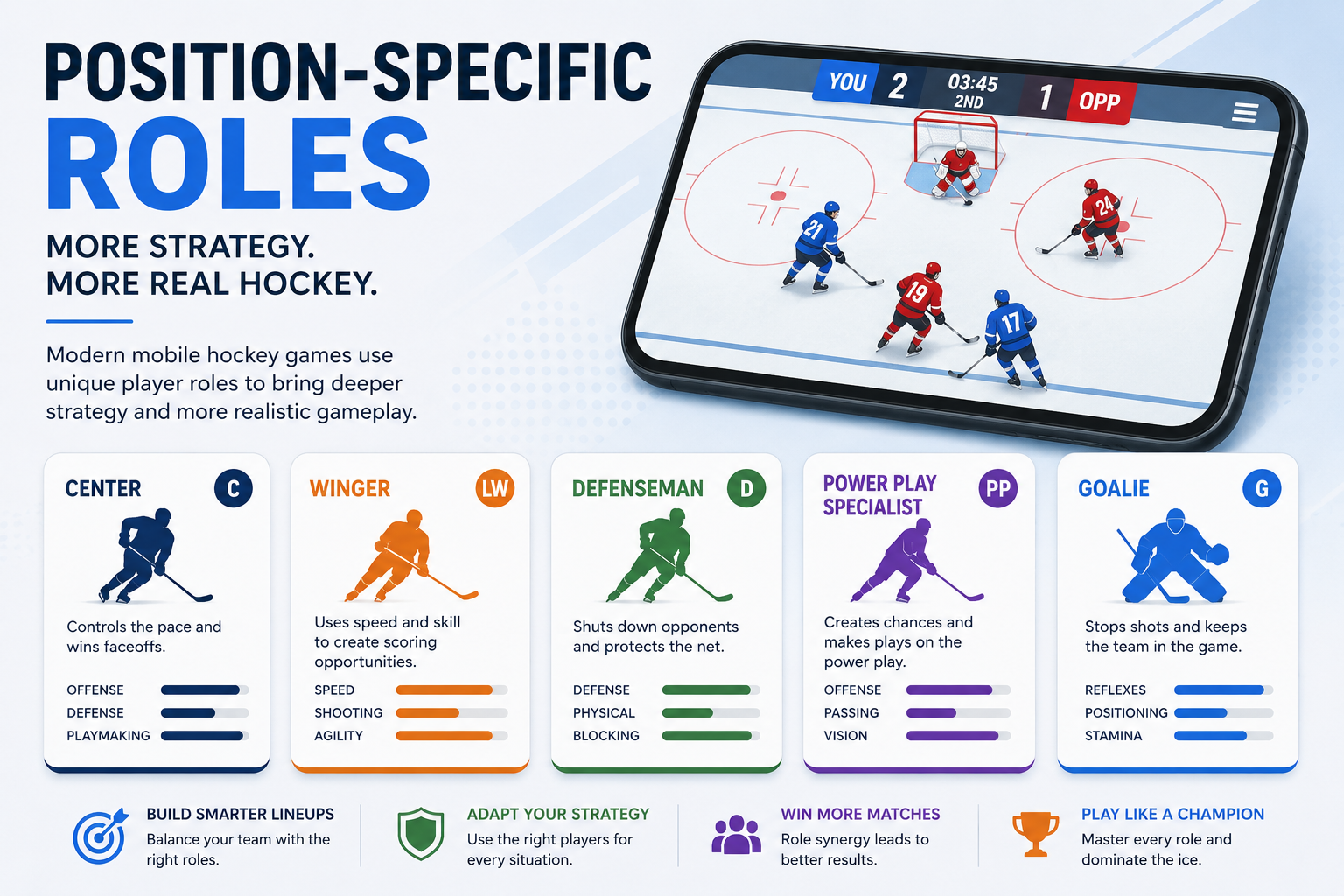
Mobile hockey games have evolved significantly over the past few years. While earlier titles often treated every player as a nearly identical skater with slightly different statistics, modern hockey games are becoming much more detailed. One of the biggest developments is the growing emphasis on position-specific roles, where centers, wingers, defensemen, and goaltenders each bring unique strengths and responsibilities to the ice.
This shift is helping mobile hockey games feel more strategic while giving players additional reasons to experiment with team-building and tactical decisions.
Moving Beyond Generic Player Ratings
For a long time, mobile sports games relied on simple overall ratings. A player with a higher score was almost always better regardless of position. While this system was easy to understand, it often reduced team-building depth.
Developers are now creating more specialized player profiles. A defensive defenseman may excel at blocking shots and protecting the net, while an offensive defenseman can generate scoring opportunities from the blue line. Similarly, centers may specialize in faceoffs and playmaking, while wingers focus on speed and finishing ability. This approach makes roster construction more meaningful because players must consider how different roles contribute to team success.
Creating More Realistic Hockey Strategies
Real hockey relies heavily on player positioning and role execution. Teams need a balance of offensive creativity, defensive stability, and reliable goaltending.
Mobile hockey games are increasingly reflecting these realities. Instead of simply assembling the highest-rated players, users are encouraged to build balanced lineups that mirror professional hockey strategies.
A team filled with scorers may struggle defensively, while a lineup built entirely around defense might have trouble generating offense. Position-specific roles help create more realistic strengths and weaknesses.
Encouraging Smarter Team Building
The rise of role-based gameplay adds another layer to team management systems. Players now evaluate factors such as:
- Faceoff specialists
- Defensive shutdown players
- Power-play quarterbacks
- Penalty-killing experts
- Speed-focused wingers
- Elite puck distributors
These decisions make progression systems more engaging because every new player acquisition can fill a specific tactical need rather than simply increasing an overall rating.
Better Long-Term Engagement
One reason developers are embracing position-specific roles is that they create longer-lasting gameplay depth. When every player serves a unique purpose, users spend more time experimenting with line combinations, testing strategies, and adjusting rosters for different opponents. This keeps gameplay fresh and prevents teams from feeling identical after a few weeks of progression. Players often enjoy discovering hidden combinations that perform better than expected, adding another layer of satisfaction to the experience.
Supporting Competitive Play
As competitive mobile sports gaming continues to grow, strategic diversity becomes increasingly important. Position-specific roles help prevent repetitive gameplay by encouraging different team styles. Some players may focus on speed and aggressive offense, while others prioritize defensive structure and puck control. This variety creates more interesting matchups and rewards strategic thinking rather than relying entirely on player ratings or in-game purchases.
The Future of Mobile Hockey Games
The growing use of position-specific roles reflects a broader trend toward deeper sports simulation experiences on mobile devices. Developers are finding ways to combine accessibility with realistic hockey strategy, giving players more meaningful decisions both on and off the ice.
As mobile hardware becomes more powerful and player expectations continue to rise, role-based systems are likely to become a standard feature rather than a niche addition. For hockey fans, that means more authentic team-building, smarter tactical gameplay, and a richer overall experience that better captures the complexity of the sport.