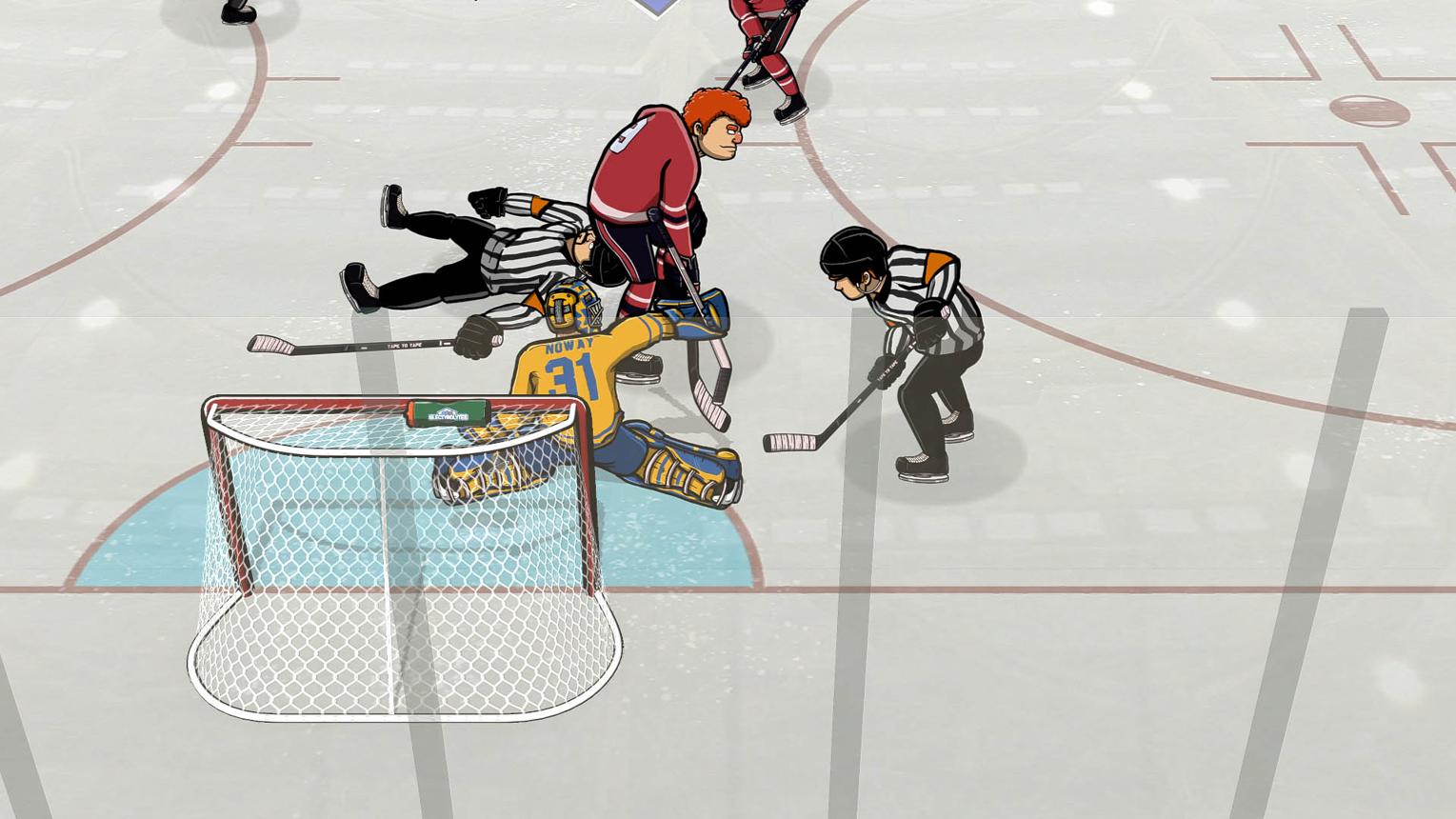
Hockey video games usually ask players to build a successful season, manage professional rosters or compete in realistic matches. Tape to Tape takes a very different approach. Its full 1.0 release, launched on October 23, 2026, combines fast-paced arcade hockey with roguelite progression, unusual opponents and team-building decisions that can change every campaign.
Developed by Excellent Rectangle, the game originally entered Steam Early Access in May 2023. The full release introduces a rebuilt campaign, 19 playable Squads, revised progression systems and significant improvements to how hockey feels on the ice. It also brings the game to Xbox Series X|S, giving console players another option beyond traditional hockey simulations. For anyone interested in sports games that experiment with familiar rules, Tape to Tape 1.0 offers an interesting example of how hockey can support an entirely different type of gameplay.
A Hockey Game Built Around Roguelite Progression
Most hockey games reward players for completing matches within a predictable competition structure. Tape to Tape instead builds its campaign around individual runs, each involving a changing sequence of opponents, events and decisions. Players control Angus McShaggy and assemble a team while attempting to restore hockey to its former glory.
Losing ends the current run, but it does not necessarily erase every form of progress. The game includes persistent unlocks that expand the options available during future attempts. Players can discover new abilities, recruit different characters and experiment with alternative team combinations.
This approach changes the meaning of failure. A difficult opponent might end one campaign, but the experience can reveal which abilities work well together or which squad configuration deserves another attempt. Rather than repeating the same season with a slightly improved roster, players are encouraged to approach the next run differently.
What Changed in the Tape to Tape 1.0 Update?
The October release was more substantial than a conventional collection of bug fixes. Excellent Rectangle rebuilt major systems that had evolved during Early Access, including campaign progression, roster management and several gameplay mechanics.
| Feature | Tape to Tape 1.0 changes |
|---|---|
| Campaign | Completely rebuilt roguelite structure |
| Playable Squads | 19 different squad options |
| Progression | New challenge-based unlock system |
| Team management | Expanded recruitment and benchwarmers |
| Gameplay | Improved physics, puck movement and controls |
| Difficulty | New Nightmare difficulty |
| Presentation | Updated visuals, menus and audio |
| Platforms | PC and Xbox Series X|S |
The developers also removed the previous puck currency system and replaced it with progression based on completing challenges. These changes make the full release noticeably different from earlier versions, particularly for players who became familiar with the original campaign.
Nineteen Squads Create Different Ways to Play
One of the most distinctive additions is the selection of 19 playable Squads. Rather than functioning as ordinary teams with slightly different player ratings, these Squads introduce their own rules, advantages and restrictions.
The GM Squad emphasizes recruiting free agents and managing the roster. The Violence Squad encourages a more physical approach, while the Retro Squad changes the experience through old-school hockey physics. The Slapshot Squad takes another direction by emphasizing powerful shooting.
These variations give players reasons to reconsider familiar strategies. A team built around physical contact may struggle when facing opponents that move the puck quickly, while a squad emphasizing shooting power may require more deliberate positioning. The key difference is that selecting a Squad can influence how an entire campaign develops, not simply which uniforms appear on the ice.
Team Building Matters as Much as Scoring Goals
Tape to Tape places unusual importance on roster construction. Players can recruit new teammates during a run, manage benchwarmers and discover combinations of abilities that complement one another. The best choice is not always the character with the strongest individual attributes. Sometimes a less impressive player becomes valuable because their abilities support the rest of the squad.
The expanded team-management system also introduces decisions involving injuries and available bench space. Certain Squads can carry additional benchwarmers, creating opportunities to adjust the lineup as the campaign develops. Other configurations impose restrictions that force players to work with fewer options.
Several decisions can shape a successful run:
- Player recruitment: Choose teammates whose strengths complement the existing lineup.
- Ability combinations: Look for useful interactions between player talents and power-ups.
- Bench management: Maintain suitable replacements when the selected Squad allows them.
- Injury decisions: Consider how losing an important player could affect upcoming matches.
- Route selection: Evaluate opponents and events before committing to the next encounter.
These systems add strategic depth without turning the game into a conventional management simulator. Players still spend much of their time skating, passing and shooting, but the decisions between matches can be just as important.
Arcade Hockey With More Responsive Controls
The 1.0 release also introduces significant improvements to the moment-to-moment gameplay. Developers revised puck behavior, physics and controls to make matches feel more responsive. The changes support the game’s emphasis on quick passing, powerful hits, rebounds and one-timer opportunities.
Unlike realistic simulations that attempt to reproduce professional hockey in detail, Tape to Tape embraces exaggerated movement and unusual abilities. Players can perform familiar hockey actions, but those mechanics exist within a deliberately unpredictable environment.
Good positioning remains essential. A powerful shot becomes more dangerous when teammates create space, while aggressive checking can leave defensive gaps if used carelessly. The game rewards players who understand basic hockey principles while remaining flexible enough to handle unexpected situations.
The combination makes the experience accessible without removing the possibility of mastering its mechanics. New players can enjoy the immediate action, while experienced players have opportunities to refine timing, passing and tactical decisions.
Tape to Tape 1.0 vs Traditional Hockey Games
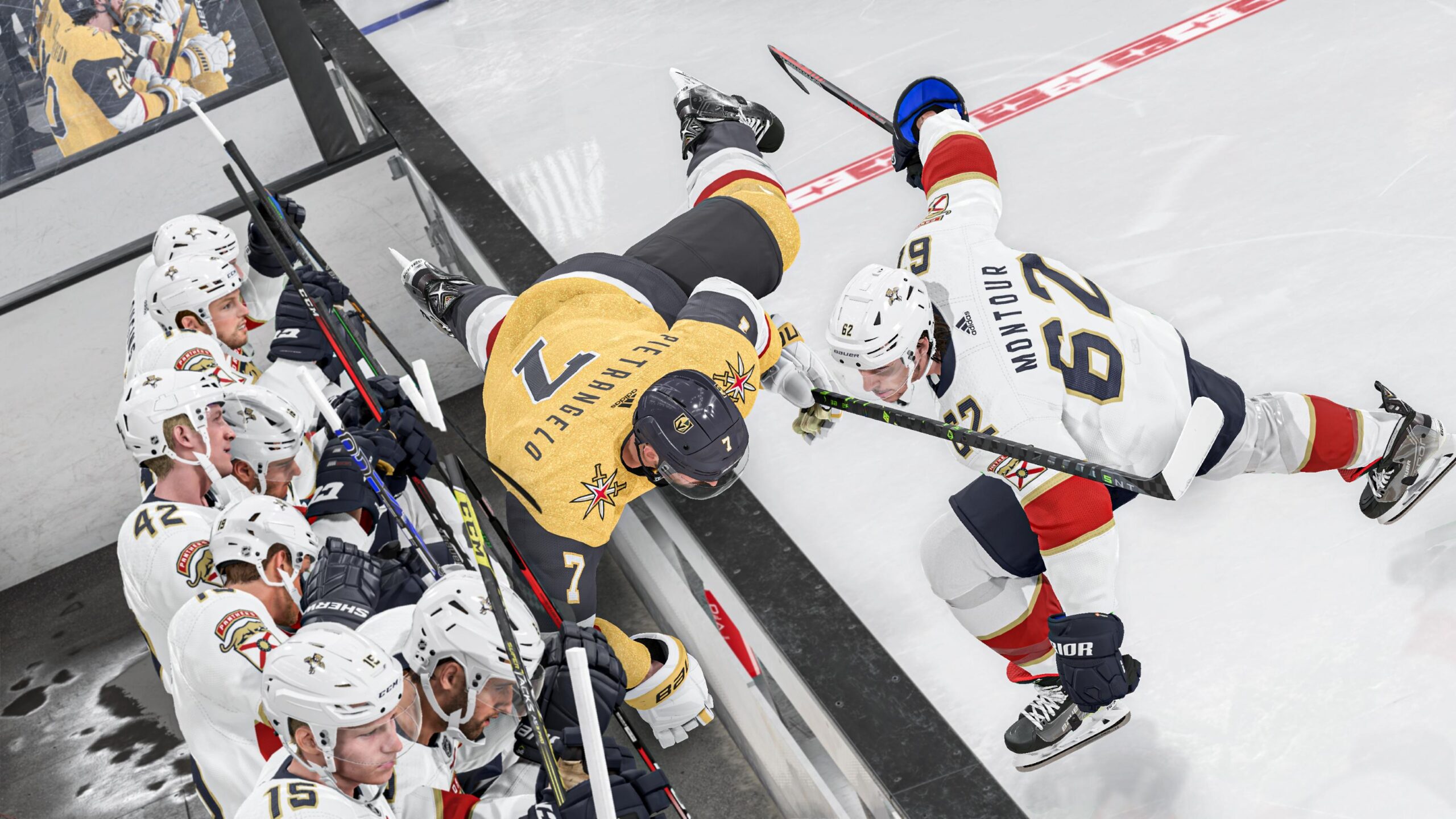
The differences become clearer when comparing Tape to Tape with conventional hockey simulations such as EA Sports NHL 27. Both revolve around hockey, but they approach progression, competition and authenticity from different directions.
| Gameplay element | Tape to Tape 1.0 | Traditional hockey simulation |
|---|---|---|
| Main focus | Roguelite arcade campaign | Realistic hockey competition |
| Team building | Recruitment during changing runs | Rosters, trades and team management |
| Progression | Challenges and persistent unlocks | Seasons, careers and competitive modes |
| Gameplay style | Exaggerated abilities and arcade action | Hockey-focused simulation mechanics |
| Opponents | Fictional teams with unusual abilities | Professional or licensed teams |
| Replayability | Different routes and Squad combinations | Seasons, online competition and careers |
Neither approach is automatically better. Players interested in professional leagues and authentic presentation may prefer a traditional simulation. Those looking for unpredictable matches and experimental team-building systems may find Tape to Tape more appealing. The comparison also highlights how much variety exists within sports gaming. Developers do not need to abandon recognizable sports mechanics to create something different.
Multiplayer and Local Co-op Expand the Experience
Although the roguelite campaign is a central attraction, Tape to Tape also supports multiplayer experiences. The campaign can be played solo or through local cooperative play, allowing friends to work together while facing its unusual opponents.
Separate modes provide opportunities for local competition. Players can organize matches, tournaments and shootouts without committing to a complete campaign. These options make the game suitable for shorter sessions as well as longer attempts to progress through its roguelite structure.
The Xbox version supports local multiplayer, while the PC release offers controller support and shared-screen options. Players should check the available features on their chosen platform, particularly when planning cooperative sessions. For a hockey game built around quick reactions and exaggerated action, playing alongside friends can add another layer of unpredictability.
What Comes After the Full Release?
Excellent Rectangle has indicated that development will continue beyond version 1.0. Planned improvements include balancing adjustments, quality-of-life changes and additional options for existing game modes.
The developers have also mentioned potential additions such as Eliminator Mode, 16-bit Mode and extra gameplay toggles. These are development plans rather than features that should be considered available in the current release.
The immediate priority is maintaining a stable experience after the substantial campaign overhaul. With so many interconnected systems, adjustments to player abilities, Squad restrictions and progression can influence how individual runs unfold. Community feedback will likely remain important as players discover effective combinations and unusual interactions that were difficult to anticipate during development.
Why Tape to Tape Matters for Sports Gaming
Tape to Tape 1.0 demonstrates that sports games do not always need realistic graphics, official licenses or annual roster updates to offer meaningful competition. Its appeal comes from combining recognizable hockey actions with progression systems more commonly associated with roguelite adventures.
The October 2026 release gives that concept a more complete foundation through its rebuilt campaign, 19 Squads and expanded team-management options. Instead of focusing exclusively on winning the next match, players must think about how each decision affects the rest of their journey.
For hockey fans, the result is an alternative to conventional simulations. For sports game developers, it offers an example of how established sporting mechanics can support unfamiliar structures without losing the excitement of competition. Tape to Tape may not attempt to recreate a professional hockey season, but its full release shows how much room remains for experimentation on the virtual ice.