The line between fantasy sports platforms and traditional mobile sports games is becoming increasingly blurred.
Over the past few years, fantasy sports apps have attracted millions of users by offering deeper engagement through statistics, player tracking, team building, and strategic decision-making. As these platforms continue growing, many mobile sports game developers are beginning to adopt similar mechanics.
In 2026, fantasy-inspired features are becoming a major influence on the way mobile sports games are designed.
Players Want More Control Over Outcomes
Traditional sports games often focus entirely on gameplay.
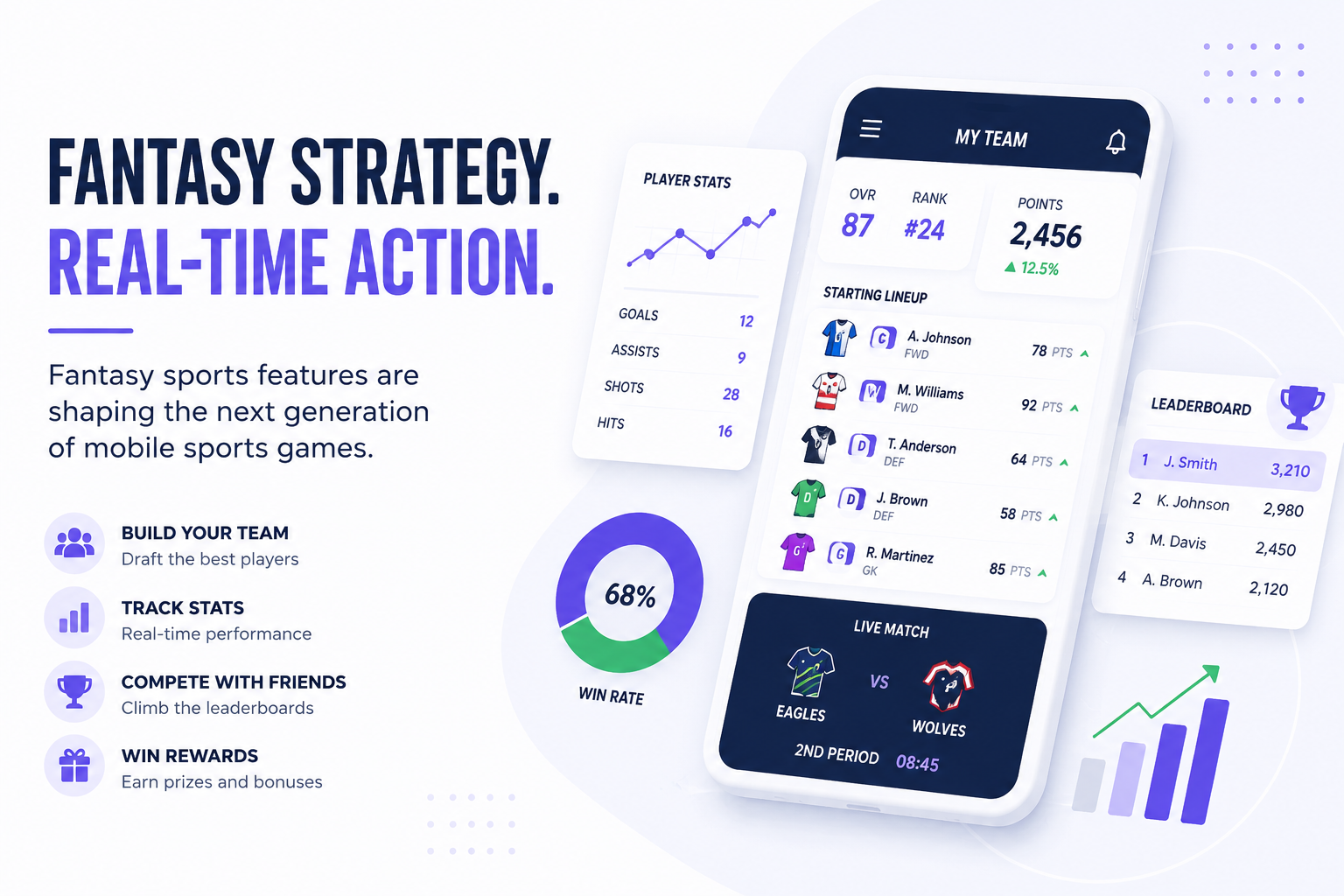
Fantasy sports platforms introduced a different approach by allowing users to build teams, track player performance, and make strategic decisions over longer periods.
Many mobile developers are now incorporating similar systems, including:
- Player selection mechanics
- Team-building features
- Statistical tracking
- Performance-based rewards
- Long-term progression
These additions create more reasons for players to stay engaged beyond individual matches.
Statistics Have Become Part of the Experience
Fantasy sports apps rely heavily on data.
Users regularly analyze player performance, compare statistics, and make decisions based on real-world information.
As a result, mobile sports games are introducing:
- Detailed player stats
- Performance reports
- Match analytics
- Achievement tracking
- Historical records
This creates a deeper and more strategic experience.
Long-Term Progression Is Becoming More Important
One reason fantasy platforms remain popular is that progression never feels limited to a single game.
Modern mobile sports titles are following the same philosophy.
| Traditional Sports Games | Fantasy-Inspired Sports Games |
|---|---|
| Match-focused gameplay | Long-term progression |
| Short-term goals | Seasonal objectives |
| Basic statistics | Advanced analytics |
| Simple rewards | Strategic team growth |
| Individual matches | Ongoing development |
This shift helps increase player retention over time.
Social Competition Continues to Grow
Fantasy sports have always been highly social.
Leaderboards, leagues, rankings, and friend competitions encourage users to remain active throughout a season.
Many mobile sports games are introducing similar features to build stronger communities and increase engagement.
Real-Time Data Is Influencing Design
Another major influence comes from live statistics.
Fantasy users expect immediate updates and real-time information. Developers are increasingly integrating these concepts into sports games through dynamic events, live challenges, and performance-based objectives.
This makes gameplay feel more responsive and connected.
The Future of Mobile Sports Gaming
As fantasy sports continue expanding globally, their influence on mobile gaming is likely to increase.
Players are showing strong interest in deeper progression systems, meaningful statistics, and strategic decision-making. Developers are responding by creating sports games that combine action with management, analytics, and long-term engagement.
In 2026, fantasy sports are no longer just a separate category. They are actively shaping the future of mobile sports gaming itself.