Sports games have become remarkably good at recreating what a match looks like, yet reproducing what it sounds like remains much harder. Arenas can be scanned in detail, player faces can be updated and real-world data can influence how teams behave, but commentary eventually runs into a familiar problem. Play enough matches and the same observations, introductions and reactions begin to return, sometimes in situations where they no longer sound entirely natural.
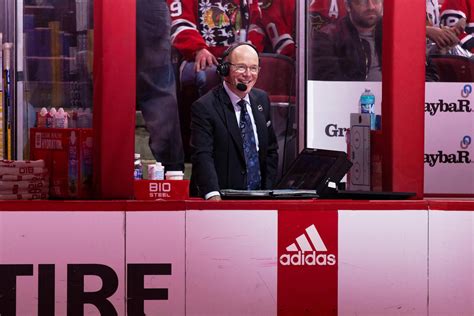
NHL 27 is experimenting with a different solution. EA Sports has confirmed that its new commentary team of John Buccigross and Darren Pang is supported by AI voice technology, used with the commentators’ consent and built on more than 50 recording sessions they have already completed. The purpose is not to replace the broadcasters with completely artificial voices, according to EA, but to expand the amount of material available and react more quickly when the real NHL changes.
That makes the system particularly interesting for sports games. Instead of treating commentary as a large collection of recordings that is largely fixed when a game launches, developers could begin treating it as something that continues evolving throughout the season.
NHL 27 Is Combining Recorded Commentary With AI Voice Technology
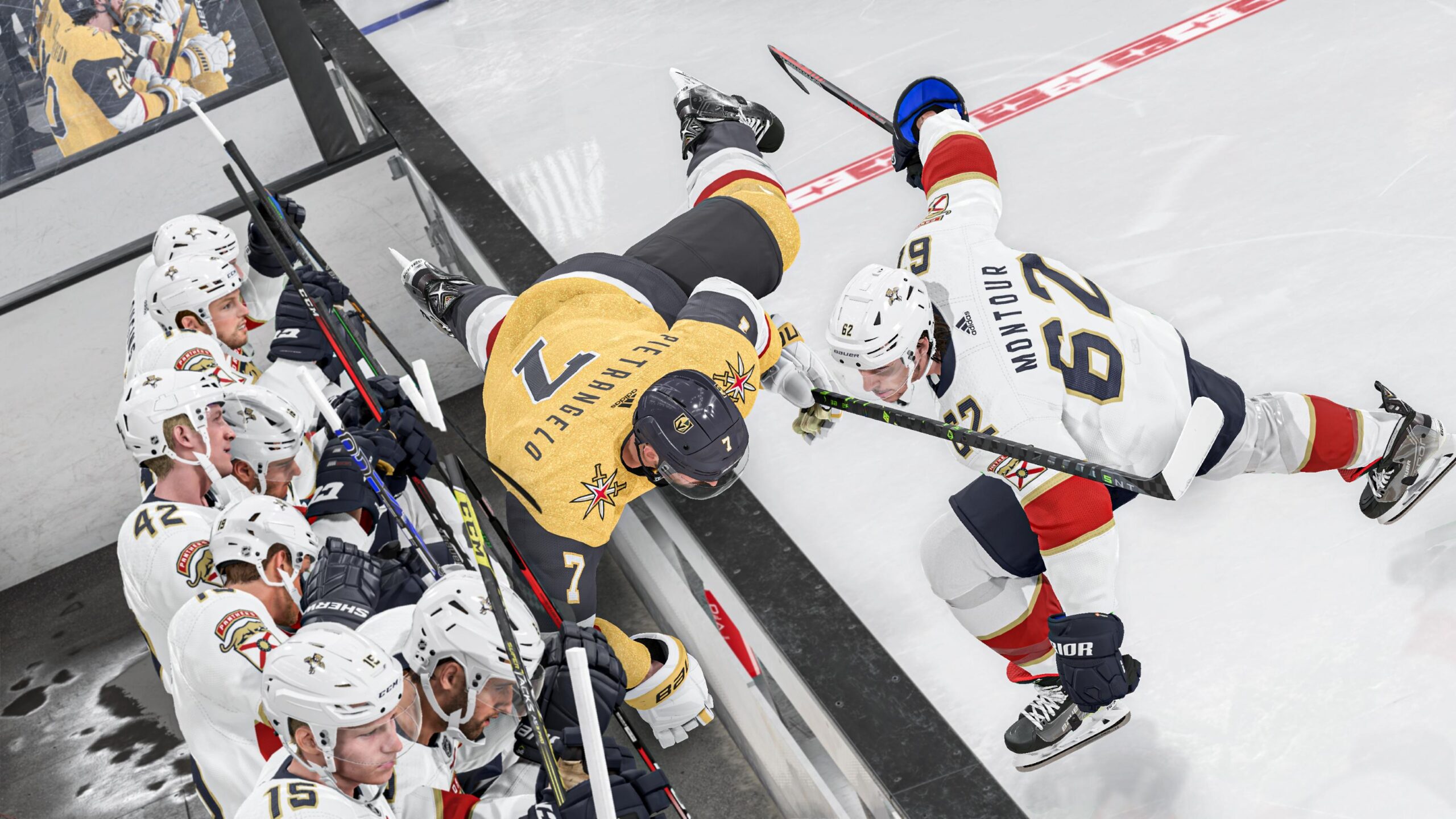
EA introduced Buccigross and Pang as part of a broader presentation overhaul for NHL 27. The game features redesigned broadcast presentation and more individual arena identity across all 32 NHL teams, including team-specific entrances, goal songs, crowd behaviour and other details intended to make one building feel different from another.
Commentary sits at the centre of that presentation because it has to respond to almost everything happening around it. A broadcaster may need lines for goals, penalties, player streaks, rivalries, overtime, individual performances and hundreds of names. Roster movement creates another problem because new players can appear during the real season after the original recording schedule has finished.
EA explained the AI component more clearly in its first major NHL 27 update. The company said the technology is being used in direct collaboration with Buccigross and Pang, who gave their consent and participated in more than 50 recording sessions. According to the developer, AI voice technology makes it possible to increase variety, react faster to changes around the league and incorporate feedback without depending entirely on another conventional recording cycle.
That distinction matters. There is a substantial difference between generating a broadcaster’s voice without involvement and using voice technology as part of an agreed production process with the broadcaster participating directly.
| Traditional commentary production | AI-assisted commentary model |
|---|---|
| Relies heavily on prerecorded lines | Can extend material from recorded voice sessions |
| New names may require another session | Updates can potentially arrive faster |
| Content is largely prepared before release | Commentary can evolve after launch |
| Large script libraries still become repetitive | Additional variation can be introduced |
| League changes can date recordings | New information may be incorporated more quickly |
NHL 27 is therefore useful as a real-world test of whether AI can solve production problems without removing the personality that makes a recognisable commentator valuable in the first place.
Repetition Is One of the Hardest Problems in Sports Game Audio
Commentary has a disadvantage that graphics do not. Players may see the same rink hundreds of times without finding it strange because a rink is supposed to remain recognisable. Hearing exactly the same sentence in similar situations for the fiftieth time is much easier to notice.
This problem becomes particularly obvious in career and franchise modes. A player may complete several seasons, generating hundreds of matches that the original commentary script was expected to cover. Even an enormous library of recorded dialogue eventually begins exposing patterns. Goal reactions repeat, descriptions of certain situations return and particular names trigger the same combinations of lines.
Simply recording more audio helps, but it scales poorly. Every additional scenario requires writing, studio time, recording, editing, implementation and testing. Sports also refuse to stand still while that work happens. Players change teams, prospects arrive, unusual storylines develop and names that seemed unimportant during production can suddenly become central to the real season.
AI-assisted voice production potentially changes that equation because new material does not always have to begin with another complete studio session. The value is not necessarily unlimited dialogue. More realistically, it is the ability to patch holes in the commentary library faster and keep the broadcast from becoming obviously outdated.
Player Names Show Why Faster Updates Matter
EA’s first NHL 27 update provides a practical example. The patch corrected commentary pronunciations for players including Brad Marchand, Jesper Bratt, Ridly Greig, Fraser Minten and several others. It also addressed repeated player-name calls during extended puck possession and fixed situational commentary that could incorrectly reference timeouts or describe a team as shortening its bench after a power-play goal.
These may sound like small details compared with a new game mode, but commentary errors can be unusually disruptive. Players know how familiar NHL names should sound, and an incorrect pronunciation can immediately break the illusion of watching a professional broadcast. A line that clearly misunderstands what just happened on the ice can be even more noticeable.
The potential advantage of an AI-assisted workflow is speed. If developers can identify a pronunciation problem, produce an approved correction and deploy it without organising a completely new recording session, commentary becomes easier to maintain throughout the game’s life.
Several areas could benefit from this approach:
- newly promoted players whose names were not prominent during development;
- trades that create new player-team combinations;
- city and arena references that need correction;
- new contextual lines based on current NHL developments;
- pronunciation fixes reported by players after release;
- additional variations for situations that occur frequently.
The challenge is making those additions sound as natural as the original recordings. More dialogue is useful only when players cannot immediately identify which lines belong together and which ones feel generated separately.
AI Cannot Fix Commentary With More Lines Alone
Repetition is only one part of convincing sports commentary. Timing and context are equally important. A perfectly realistic voice can still sound artificial if it reacts too late, describes the wrong event or delivers an excited line during an unimportant moment.
NHL 27’s first update demonstrates this indirectly. EA did not only correct pronunciations; it also adjusted commentary logic. That indicates the underlying challenge involves choosing the correct line at the correct moment, not merely creating a larger library of sentences.
A strong commentary system needs to understand what is happening across several layers. It should know the score and time remaining, but ideally it should also recognise whether a goal changes the direction of a match, whether a player has been unusually influential or whether a team is repeating a pattern seen earlier. Those connections are what make a broadcast sound like a continuous story rather than unrelated audio clips.
AI voice generation does not automatically provide that understanding. Developers still need systems that select appropriate situations, control repetition and prevent contradictory statements. In other words, generating a line can become easier while deciding when that line belongs remains a game-design problem.
This may explain why the most interesting future improvements will combine better voice production with better contextual logic rather than treating synthetic speech as the entire solution.
Consent Could Become a Major Part of AI Commentary
There is another reason EA’s explanation deserves attention: the company explicitly highlighted the involvement and consent of Buccigross and Pang. Voice is closely connected to personal identity, and sports broadcasters build careers around voices that audiences immediately recognise. Using that identity through AI therefore raises questions that ordinary audio editing does not.
A sustainable model needs clear agreements covering how a voice can be used, what material can be generated and what happens when new dialogue is created after the original recording sessions. Broadcasters also need confidence that synthetic lines will not make them appear to say things they would never approve.
EA’s description of NHL 27 presents AI as an extension of an ongoing partnership rather than a replacement for the performers. That model may prove more useful for sports games than trying to eliminate recording sessions entirely. Original sessions provide genuine performances, pronunciation references and personality, while approved technology can help expand coverage between them.
For publishers, this approach could also reduce one of the biggest risks surrounding AI voices: players reacting negatively when technology appears to have been used primarily to remove human performers from production.
Live Sports Games Could Start Sounding More Like Live Services
Sports games already change after release. Ratings are updated, rosters move, bugs are fixed and gameplay balancing continues throughout the season. Commentary has historically been less flexible because producing new broadcast audio is comparatively cumbersome.
AI-assisted production could bring audio closer to the live-service model used elsewhere in these games. A major trade might eventually receive relevant commentary sooner. A rookie who unexpectedly becomes a star could gain additional lines during the same season rather than waiting for the next annual release. Persistent pronunciation or repetition problems could be corrected as part of ordinary updates.
NHL 27 is not yet demonstrating an endlessly generated live broadcast, and it would be misleading to describe it that way. EA is using AI voice technology within a controlled commentary production process, while patches still show that developers have to manually identify and correct problems.
That may actually make the experiment more relevant. The immediate future of AI in sports games is unlikely to be an artificial announcer inventing every sentence in real time. A hybrid workflow in which human broadcasters establish the performance and technology helps developers maintain and expand it is far more practical.
NHL 27 May Be Showing Where Sports Commentary Goes Next
Sports game commentary has spent years becoming larger without completely escaping repetition. NHL 27 suggests that the next improvement may come from changing how those libraries are produced and maintained rather than simply recording thousands of additional lines before launch.
The technology still has to prove itself. Players will judge whether new dialogue sounds natural, whether repeated lines genuinely become less common and whether contextual mistakes are corrected quickly enough to make a difference. Developers must also maintain clear boundaries around broadcaster consent and quality control.
Yet the potential is substantial. A sports game that can update its voices alongside its rosters and gameplay could remain convincing much deeper into a season. The broadcast would no longer need to be almost entirely frozen at release while the sport it represents continues changing every week.
NHL 27’s experiment is therefore less about replacing the commentary booth than making it more adaptable. If that balance works, AI’s most useful contribution to sports games may not be creating imaginary broadcasters at all. It may be helping real ones stay relevant for longer.