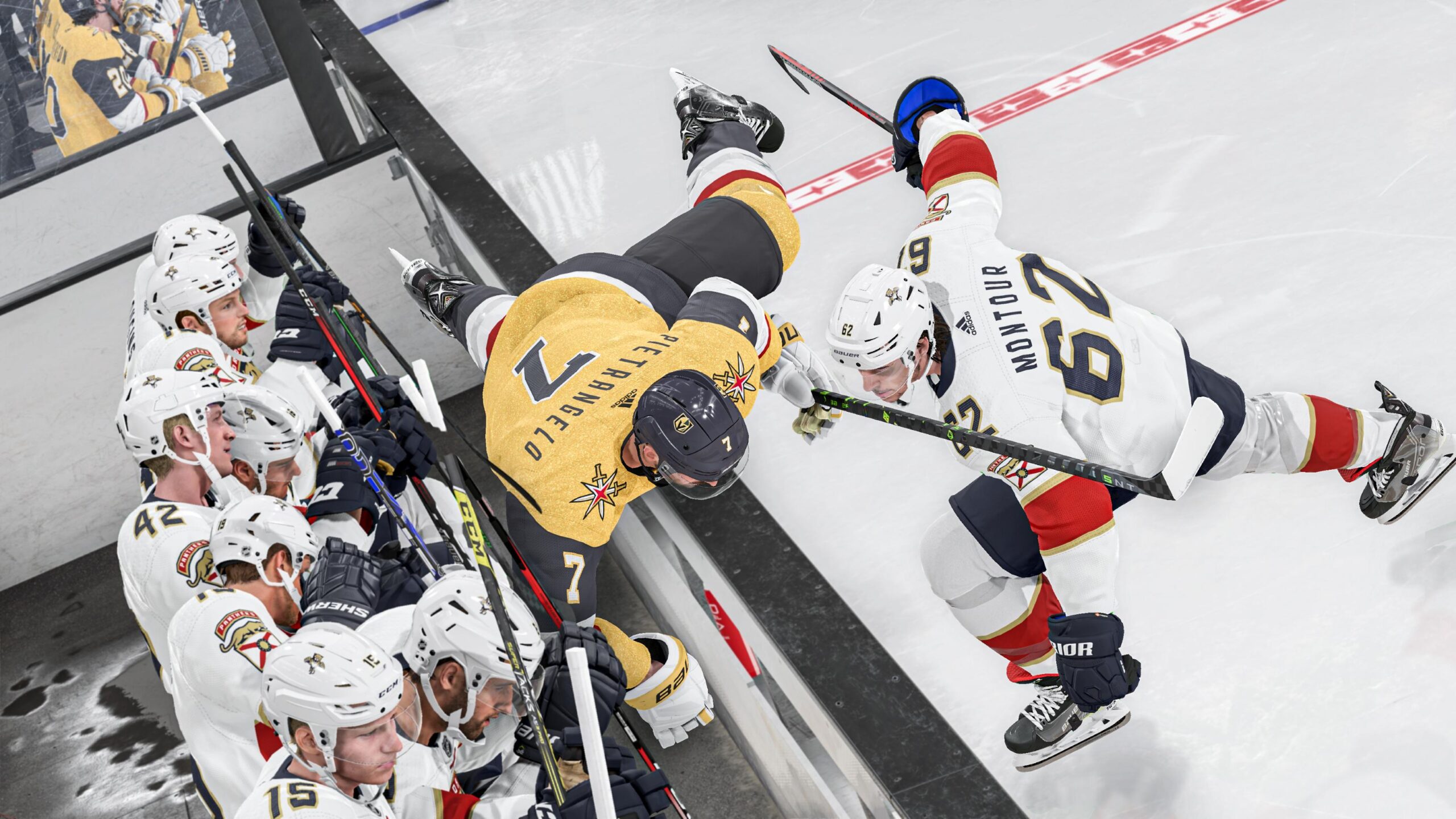
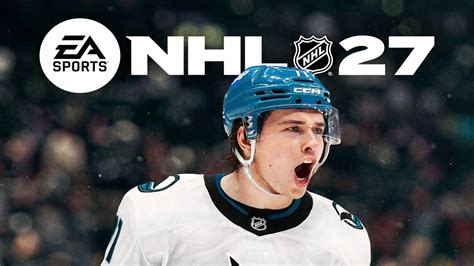
Playing against a friend in a hockey video game usually means choosing two teams, finishing a match and starting again. The result matters for a few minutes, but there is rarely much connecting one evening’s competition to the next. NHL 27 approaches multiplayer differently with Connected Franchise, a mode built around running an entire hockey league alongside other people rather than simply arranging isolated online matches.
Released on September 11, 2026, EA SPORTS NHL 27 introduces shared leagues supporting up to 32 human-controlled teams. Participants can manage their own franchises, negotiate trades, compete through regular seasons and return for subsequent campaigns. EA has also introduced commissioner controls intended to make organising these competitions more practical, addressing one of the persistent challenges faced by long-running online gaming communities.
The development is particularly interesting because it shifts attention from individual matches towards the relationships and decisions that develop around them. Winning one game remains satisfying, but a rivalry becomes considerably more meaningful when both players are competing for the same playoff position over several weeks.
Why Connected Franchise Is More Than Another Multiplayer Mode
Connected Franchise gives a group of players control over a shared hockey competition. Instead of every participant maintaining a separate franchise save, managers operate within the same league environment, where transactions and results influence everyone involved. A trade between two teams can alter the balance of an entire division, while a surprise victory may change another manager’s route into the playoffs.
EA designed the mode to accommodate different group sizes, from three friends organising a relatively relaxed competition to a full league featuring 32 human-controlled teams. Commissioners can adjust conference and division structures, salary-cap settings, gameplay sliders and playoff formats. Shared rosters also support cross-platform use, allowing participants on supported consoles to begin with a consistent league setup.
This flexibility matters because organising a successful online sports league involves more than finding enough interested players. People have different schedules, levels of experience and expectations about how competitive the experience should become. Giving groups control over their league structure makes it easier to establish an arrangement everyone understands before the first puck drops.
Flexible Scheduling Could Keep Online Leagues Alive Longer
One of the biggest difficulties with community-run sports competitions is maintaining momentum after the opening week. Participants may initially be enthusiastic, but work commitments, holidays and time-zone differences can make rigid match schedules difficult to maintain. When every fixture must happen in a predetermined sequence, one unavailable player can potentially delay progress for several others.
Connected Franchise addresses this problem through flexible scheduling. If two managers have an available matchup and are ready to play, they can complete it without waiting for every earlier fixture to finish. The league can therefore continue progressing even when individual participants have limited availability. The approach does not eliminate the need for organisation, but it gives commissioners more practical options for keeping a season active.
How the New League Structure Works
| Feature | What It Allows Players to Do |
|---|---|
| League size | Create competitions with 3–32 human-controlled teams |
| Flexible scheduling | Play available fixtures without following a strictly linear order |
| Custom rosters | Use default, updated or shared custom team setups |
| League settings | Adjust divisions, conferences, rules and playoff structures |
| Multiple seasons | Continue competing with the same group beyond one campaign |
| Commissioner controls | Manage participants, transactions and league progression |
The inclusion of multiple seasons is particularly significant. It allows decisions made during one campaign to become part of a longer competitive history, giving managers a reason to remain involved even after an unsuccessful playoff run.
Trades and Free Agency Become Social Decisions
Roster management has been part of hockey games for years, but introducing several human managers changes the experience considerably. Trading with computer-controlled teams involves understanding the game’s valuation system. Negotiating with another person introduces competing priorities, uncertainty and the possibility that a rival simply refuses to strengthen your roster.
NHL 27 allows managers to negotiate transactions involving up to five players and advertise available assets through a trade block. Participants can identify positional, age or salary requirements, making it easier for other managers to understand what kind of deal they might consider. Free agency introduces another competitive element through a blind-bidding system, where teams submit claims without knowing precisely what their rivals have offered.
These mechanics create opportunities for longer-term planning. A manager rebuilding an unsuccessful franchise might prioritise younger players, while someone chasing an immediate championship could sacrifice future flexibility to strengthen a weak position.
The important distinction is that these choices take place within a shared environment. A successful trade does not simply improve one roster; it changes the competitive situation facing everyone else.
The Commissioner Has a Much Bigger Role
Running an online league can become surprisingly demanding when disagreements, unavailable participants or technical interruptions begin affecting results. Connected Franchise introduces a dedicated Commissioner Tool Suite to help one organiser oversee the competition without relying entirely on external spreadsheets or messaging applications.
Commissioners can review transactions, process free-agent claims, manage participants and communicate through league-wide announcements. They can also override results when necessary, including situations where a disconnect prevents a fixture from concluding normally.
According to EA’s September 2026 support documentation, commissioner responsibilities include:
- Inviting managers and reviewing requests to join.
- Approving trades and processing free-agent claims.
- Adjusting league rules and selected roster settings.
- Overriding results when a match requires administrative intervention.
- Moving participants between teams.
- Advancing the competition through different season phases.
These functions do not guarantee that every league will operate smoothly. Much still depends on the organiser establishing fair rules and communicating expectations. Nevertheless, integrating the necessary tools into the game removes some of the administrative work that can discourage players from maintaining community competitions.
What Shared Leagues Could Teach Smaller Sports Games
Connected Franchise is currently a console feature within NHL 27, available on PlayStation 5 and Xbox Series X|S. It should not be confused with a confirmed mobile release or an announced feature for other hockey titles. However, its underlying design offers several interesting lessons for developers working on smaller sports games, including mobile hockey experiences.
Many mobile titles already include short matches, player upgrades and seasonal progression. Their social features, however, can remain relatively limited, particularly when multiplayer competition revolves around individual rankings rather than a persistent shared environment.
A simplified community league could provide a different reason to return regularly. Instead of requiring console-level management complexity, mobile developers might explore smaller competitions with scheduled fixtures, persistent standings and accessible administrative controls.
The most transferable ideas are not necessarily the most complicated ones. Flexible scheduling, visible league activity and meaningful season progression could work within relatively lightweight game systems, provided they remain suitable for shorter mobile gaming sessions.
There is also an important accessibility consideration. A feature intended to encourage social play should not require every participant to be online simultaneously or spend hours managing menus before completing a match.
Can Connected Franchise Maintain Player Interest?
The return of a shared online franchise experience answers a longstanding request from the NHL gaming community, but its success will depend on how reliably leagues operate after their initial launch. EA has described the current implementation as the foundation for future development and established a dedicated feedback portal for players to report problems and suggest improvements.
Several practical questions will shape the experience over time. How effectively will leagues handle inactive managers? Will commissioners find the available controls sufficient for different competition styles? Can a group complete several consecutive seasons without technical or organisational problems?
These issues matter because Connected Franchise is designed around continuity. A disconnected exhibition match may be frustrating, but an unresolved fixture in a competitive league can affect standings, rivalries and playoff qualification for several participants.
EA’s commitment to ongoing development provides an opportunity to address those concerns through player feedback, although the quality of future changes will need to be judged through actual updates rather than initial promises.
A Different Kind of Hockey Competition
NHL 27’s Connected Franchise introduces something that ordinary online matchmaking cannot easily reproduce: a persistent competition in which several people contribute to the same evolving season. Its combination of shared rosters, flexible scheduling, human negotiations and commissioner oversight gives players more reasons to remain involved between matches.
The feature also highlights an interesting direction for sports game design. Better graphics and more detailed player animations can improve individual matches, but community systems can change how people experience a game over months rather than minutes.
For groups willing to organise a league, Connected Franchise offers the opportunity to build their own competitive hockey history. The challenge now is ensuring that the systems supporting those communities remain reliable enough for the rivalries to continue long after the opening weekend.