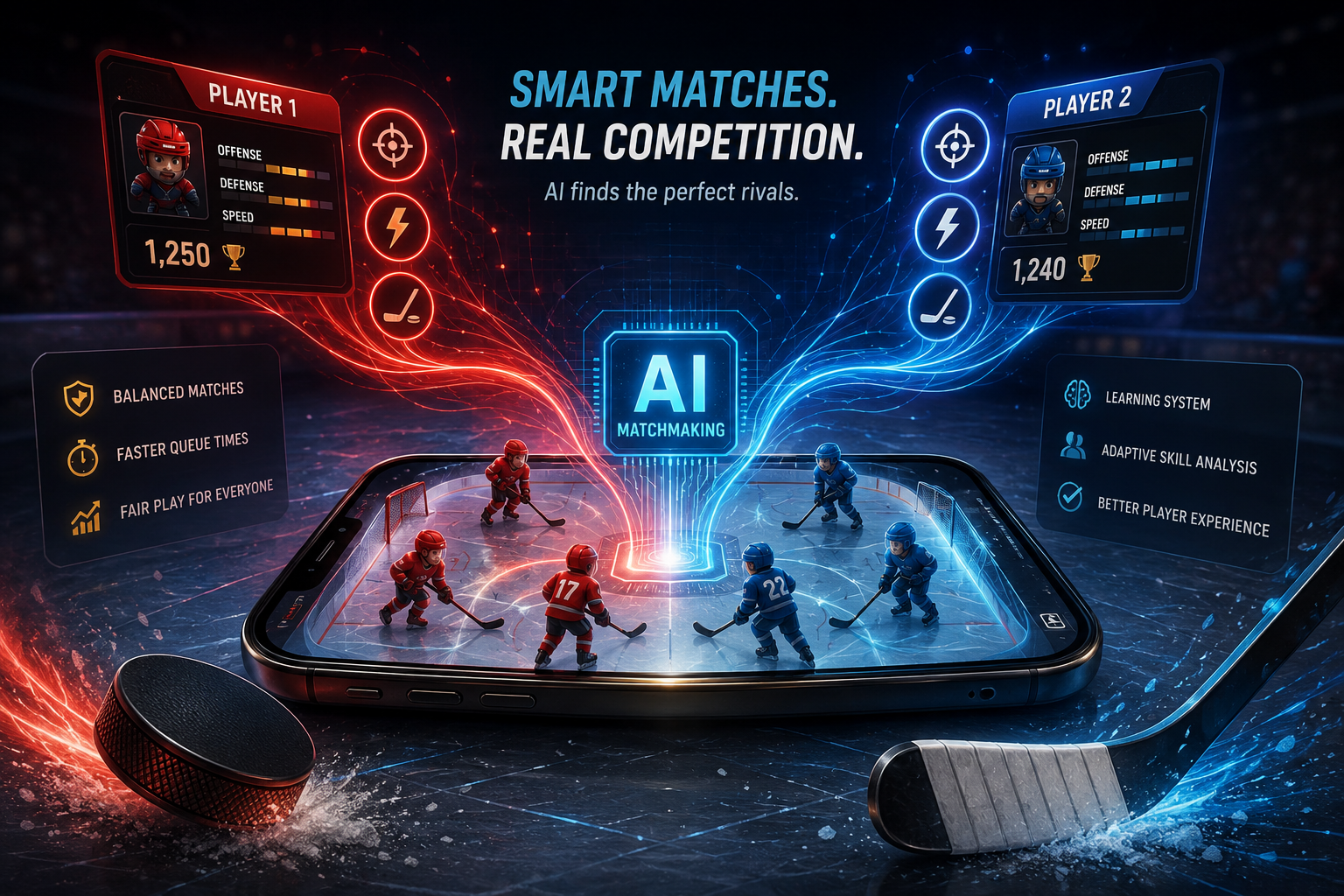
Artificial intelligence is quietly reshaping one of the most important systems in competitive mobile hockey games: matchmaking. While players often notice improvements in graphics or gameplay mechanics first, the quality of each match has an even greater impact on long-term enjoyment. Developers are now using AI-driven matchmaking systems to create balanced games, reduce frustration, and keep players engaged for longer sessions.
Unlike traditional matchmaking, which mainly compares visible rankings, AI evaluates hundreds of additional signals to determine which players are likely to have the most enjoyable and competitive experience together.
Moving Beyond Simple Skill Ratings
Older matchmaking systems relied heavily on numerical ratings or win-loss records. While these metrics remain useful, they often fail to represent a player’s current form.
Modern AI systems can analyze factors such as:
- Recent match performance
- Offensive and defensive tendencies
- Passing accuracy
- Shooting efficiency
- Goalkeeper success rate
- Connection quality
- Device performance
- Preferred play style
This creates a far more complete picture of every player before a match begins.
Creating Fairer Matches
One of the biggest reasons players abandon competitive games is repeated one-sided matches. AI helps reduce this problem by identifying players with similar performance profiles instead of relying only on rank.
For example, two users may have identical ratings, but one prefers aggressive attacking while the other focuses on defensive positioning. AI can recognize these differences and find opponents who create a more balanced and enjoyable contest. The result is closer games that remain competitive until the final seconds.
Learning From Every Match
Unlike static algorithms, AI matchmaking improves over time. After every completed game, the system collects anonymous gameplay data, including:
- Match duration
- Goal differences
- Player actions
- Win probability changes
- Disconnection frequency
- Control accuracy
Machine learning models use this information to refine future matchmaking decisions, making each update smarter than the last.
Reducing Waiting Times
Players expect fast matchmaking, but speed should not come at the cost of match quality. AI helps balance both objectives by continuously evaluating available players and predicting the best possible opponent without making users wait unnecessarily.
Instead of searching within fixed ranking ranges, intelligent systems dynamically expand or narrow the player pool depending on:
- Server population
- Time of day
- Region
- Estimated queue length
This produces faster matchmaking without sacrificing competitive balance.
Supporting New Players
The first few matches often determine whether someone continues playing a mobile game. AI can identify inexperienced players by analyzing behavior instead of relying solely on account level. It may notice slower reactions, missed passes, or unfamiliar movement patterns and temporarily pair these users against similarly skilled opponents.
This creates a smoother learning experience while reducing frustration during the onboarding process.
Recognizing Different Play Styles
Not every player approaches hockey the same way. Some enjoy high-scoring offensive games, while others focus on disciplined defense or strategic puck control.
AI can recognize these preferences and create matches where playing styles complement one another rather than clash unfairly. This makes games feel more natural and encourages players to continue developing their preferred strategies instead of adapting to repetitive matchmaking patterns.
Improving Competitive Seasons
Ranked seasons have become a central feature of many mobile hockey games. AI enhances these systems by ensuring that progression reflects genuine performance rather than lucky matchmaking streaks.
Smarter pairing means:
- More accurate rankings
- Greater competitive integrity
- Fairer promotion and relegation
- Better seasonal rewards
Players are more likely to trust ranking systems when victories consistently feel earned.
Detecting Unusual Behavior
AI is also becoming valuable for maintaining healthy online competition. By monitoring gameplay patterns, matchmaking systems can identify suspicious behavior such as intentional losing, account boosting, repeated matchmaking manipulation, or other activities that negatively affect competitive balance.
Rather than relying exclusively on manual reports, developers can respond much faster to unusual trends and protect the overall player experience.
The Future of AI Matchmaking
As mobile hockey games continue evolving, AI matchmaking will likely become even more sophisticated. Future systems may predict player fatigue, adapt to changing skill levels in real time, recommend ideal game modes, or personalize matchmaking based on individual preferences rather than generic rankings.
Instead of simply finding the next available opponent, AI will focus on creating matches that are competitive, engaging, and enjoyable for every participant.
Final Thoughts
Artificial intelligence is transforming matchmaking from a simple ranking system into an intelligent decision-making engine. By considering player behavior, recent performance, connection quality, and gameplay style simultaneously, AI creates fairer matches that keep competition exciting. As mobile hockey games continue growing, smarter matchmaking will become one of the most important features influencing player satisfaction, retention, and the overall quality of competitive play.