Mobile hockey games have traditionally focused on fast skating, shooting, checking, and quick scoring opportunities. That approach works well on smartphones, but developers are increasingly looking for ways to add tactical depth without slowing matches down. Dynamic line changes offer one of the most effective ways to achieve that balance.
Instead of using the same players for an entire match, teams rotate different forward lines and defensive pairings based on fatigue, game situations, and tactical priorities. When adapted carefully for mobile play, this mechanic can make every shift feel more meaningful.
Why Line Changes Matter
In real hockey, players cannot remain on the ice indefinitely. Short, intense shifts require coaches to rotate lines constantly. Mobile games can use the same principle to create decisions beyond basic puck control.
Players may need to decide:
- when to change tired forwards;
- which line should face a strong opposing unit;
- when to preserve top players for a power play;
- whether to keep an effective line on the ice longer;
- how aggressively to rotate defensive pairings.
These choices add strategy without requiring complicated menus.
Fatigue Changes the Flow of a Match
Dynamic line systems become more interesting when fatigue affects performance. A fresh player may accelerate faster, react more quickly, or maintain better positioning. A tired player might lose speed or become less effective during long defensive sequences. This creates a simple trade-off.
Keeping a strong line on the ice may increase short-term pressure, but delaying a change can make the next phase of play more difficult. The mechanic rewards timing rather than constant substitution.
Automatic and Manual Changes Can Work Together
Mobile controls need to remain simple, so forcing players to manage every line change manually would quickly become frustrating. A better approach combines automation with optional player control. Automatic systems can handle routine substitutions, while manual controls become available during important moments.
For example:
| Situation | Possible Line Decision |
|---|---|
| Long defensive shift | Replace tired players |
| Offensive-zone pressure | Keep scoring line active |
| Power play | Deploy specialist unit |
| Final minute while trailing | Use strongest attacking line |
| Protecting a lead | Switch to defensively stronger players |
This gives advanced players more control without overwhelming beginners.
Matchups Add Tactical Depth
Line changes also create opportunities for matchup management. Different units can have distinct strengths. One line may excel at speed, another at physical play, while a defensive unit may be designed to protect a lead. Players can then react to the opponent rather than using the same strategy throughout every match.
If the opposing team sends out a fast attacking line, the player might respond with quicker defenders. Against a physical unit, stronger checking players may become more useful. This makes team composition matter during gameplay rather than only before the match begins.
Short Shifts Fit Mobile Sessions
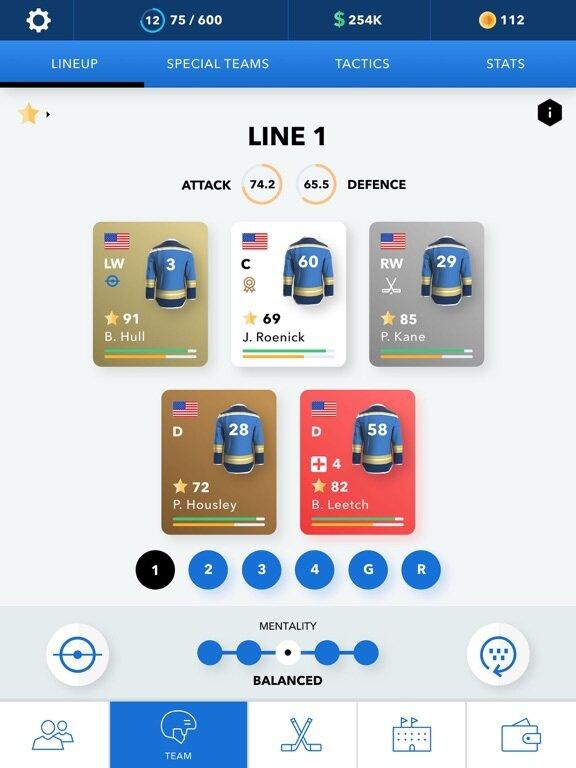
The mechanic also works naturally with the short rhythm of mobile hockey. Players do not need long coaching menus between shifts. Small visual indicators can show energy levels, while one-tap controls allow quick substitutions.
Useful interface elements may include:
- energy bars;
- line numbers;
- quick-change buttons;
- fatigue warnings;
- highlighted recommended substitutions.
When these elements remain compact, tactical decisions can happen without interrupting the action.
Power Plays Become More Interesting
Special teams offer another opportunity for dynamic line management. Instead of automatically placing the same players on the ice, mobile hockey games can allow different power-play and penalty-kill units. A player may choose between:
- a shooting-heavy power-play group;
- a passing-focused unit;
- defensive specialists for penalty killing;
- faster players for counterattacks.
This creates more variety in situations that might otherwise feel repetitive.
Line Changes Can Reduce Repetitive Gameplay
One problem in sports games is the tendency to rely on the same high-rated players throughout every match. Fatigue and shift management reduce that behavior.
If top players cannot dominate indefinitely, the entire roster becomes more relevant. Secondary lines receive meaningful ice time, and team depth becomes part of the gameplay. This encourages players to build balanced squads rather than simply collecting a few powerful stars.
AI Opponents Benefit Too
Dynamic line systems become more convincing when AI-controlled teams follow similar rules.
Opponents can react to:
- player fatigue;
- score differences;
- matchups;
- penalties;
- late-game situations.
An AI team protecting a narrow lead may rely more heavily on defensive units, while a team chasing a goal could shorten its bench and use stronger attacking lines more frequently. These behaviors help matches feel less scripted.
The Interface Needs to Stay Clear
The main design challenge is avoiding unnecessary complexity. Mobile hockey games succeed partly because they are easy to understand. Line-management features should therefore add decisions without turning the game into a full coaching simulator.
Clear icons, automatic recommendations, and simple controls can preserve accessibility while still offering tactical depth. Players who want a casual experience can rely on automation. More competitive users can take direct control when they see an advantage.
Why This Mechanic Has Long-Term Potential
Dynamic line changes connect several parts of hockey gameplay that are often treated separately: fatigue, roster depth, matchups, special teams, and game management. That makes the system valuable because it does not need to create entirely new modes. It can deepen the matches players are already playing.
A close game becomes more interesting when the strongest line is tired. A power play matters more when the player has saved the right unit for that moment. A defensive lead becomes more tactical when fresh checking players can replace an exhausted attacking line.
Mobile hockey games do not need to copy every detail of professional coaching to benefit from this idea. Even a simplified version of line management can make matches feel less predictable and give players more meaningful decisions between goals. As developers continue searching for ways to combine fast mobile gameplay with deeper strategy, dynamic line changes offer a practical way to make every shift count.