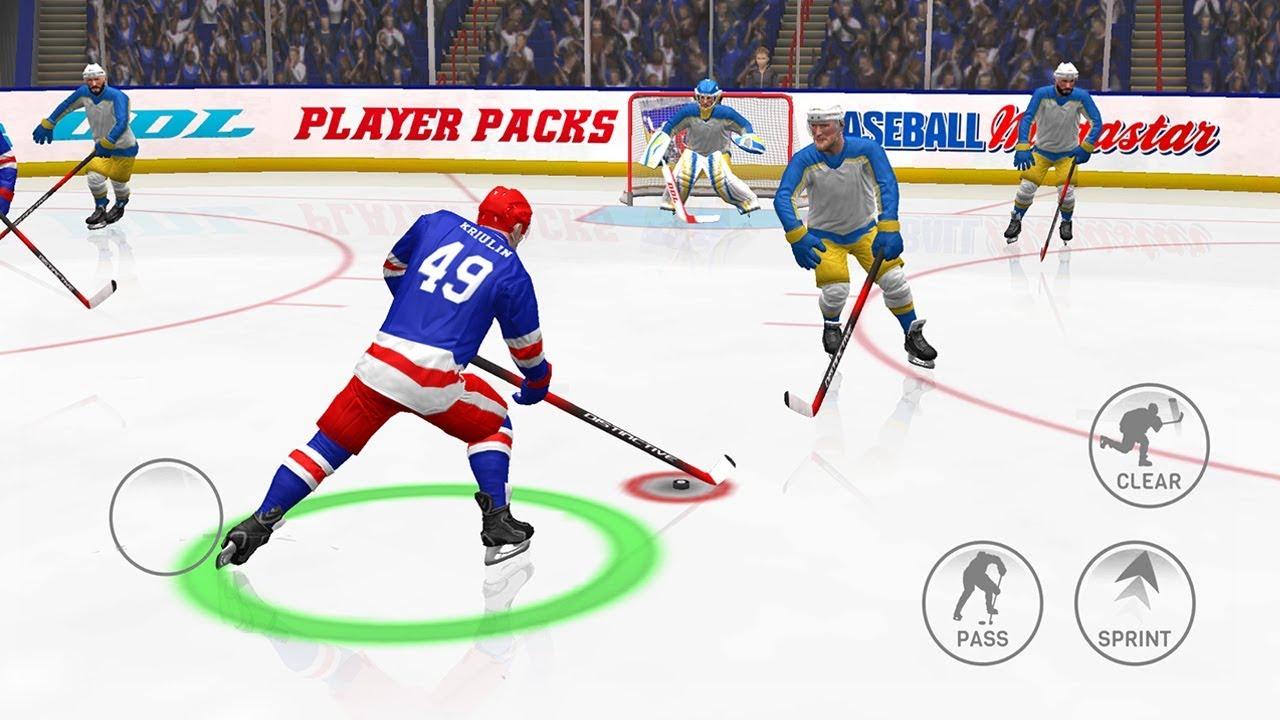
Mobile hockey games have spent years improving the obvious parts of the experience: faster matches, smarter goalkeepers, better puck physics and more convincing arenas. One area is now becoming just as important, even though it is less noticeable at first glance. Developers are paying far more attention to how players actually control the puck while skating, turning, protecting possession and preparing a pass or shot.
Stick handling used to be heavily simplified on smartphones because touchscreen controls left little room for complicated combinations. Modern games are finding ways around that limitation. Instead of asking players to perform console-style input sequences, they combine contextual animations, directional gestures and assisted puck positioning to create a system that feels responsive without becoming difficult to use.
Puck possession is becoming more interactive
Older mobile hockey games often treated possession almost like an on-off state. A skater either controlled the puck or lost it after a collision. That approach worked for quick arcade matches, but it gave players few ways to influence what happened between receiving the puck and taking a shot.
Newer stick handling systems introduce more intermediate states. A player may shift the puck from forehand to backhand, move it away from a defender, change skating direction while maintaining control or deliberately slow down before accelerating into open space. These actions turn ordinary possession into a sequence of small decisions rather than simply moving toward the goal.
The difference becomes particularly noticeable near defenders. Instead of relying entirely on speed, players can manipulate puck position to create passing lanes or force defenders to commit in the wrong direction. Even relatively simple controls can create considerably more tactical depth when the underlying animation and physics systems respond intelligently.
Touchscreen controls require a different approach
A smartphone cannot reproduce every button, trigger and analog stick found on a traditional controller. Developers therefore need to decide which actions deserve direct input and which can be handled automatically by the game.
Many mobile hockey systems now use contextual assistance. A swipe might trigger a deke when an opponent is nearby but perform a normal puck movement when the skater has open ice. Directional movement can also influence which side of the body protects the puck without requiring a separate control.
Common approaches include:
- Swipe gestures for quick dekes and lateral puck movement
- Automatic forehand and backhand positioning based on skating direction
- Context-sensitive puck protection near defenders
- Assisted stick placement when receiving difficult passes
- Short input windows for combining movement with shots or passes
The result is not necessarily a more complicated control scheme. In many cases, the interface actually becomes simpler because the game interprets the player’s intention instead of demanding a separate button for every possible action.
Better stick handling changes how players attack
Improved puck control has consequences beyond individual animations. It changes the structure of offensive play because players have more options when approaching defenders.
A basic mobile hockey attack often followed a predictable pattern: skate quickly into the offensive zone, move toward the center and shoot. Better handling systems make alternative approaches more useful. Players can delay an attack, enter from the boards, cut toward the slot after drawing a defender outward or carry possession behind the goal before looking for a pass.
| Attacking situation | Basic control system | Advanced stick handling system |
|---|---|---|
| One-on-one rush | Speed or immediate shot | Deke, puck protection or direction change |
| Entering the zone | Direct skating line | Multiple entry angles |
| Near the boards | High chance of losing possession | Ability to shield the puck |
| Creating a shooting lane | Mainly player movement | Player and puck can move independently |
| Waiting for teammates | Difficult without losing momentum | Controlled possession becomes practical |
These differences make offensive possessions less repetitive. Two attacks beginning from almost identical positions can develop very differently depending on how the user controls the puck.
Defensive play becomes more meaningful as well
Better offensive control only works when defenders have tools to respond. Developers therefore tend to improve defensive interactions alongside stick handling.
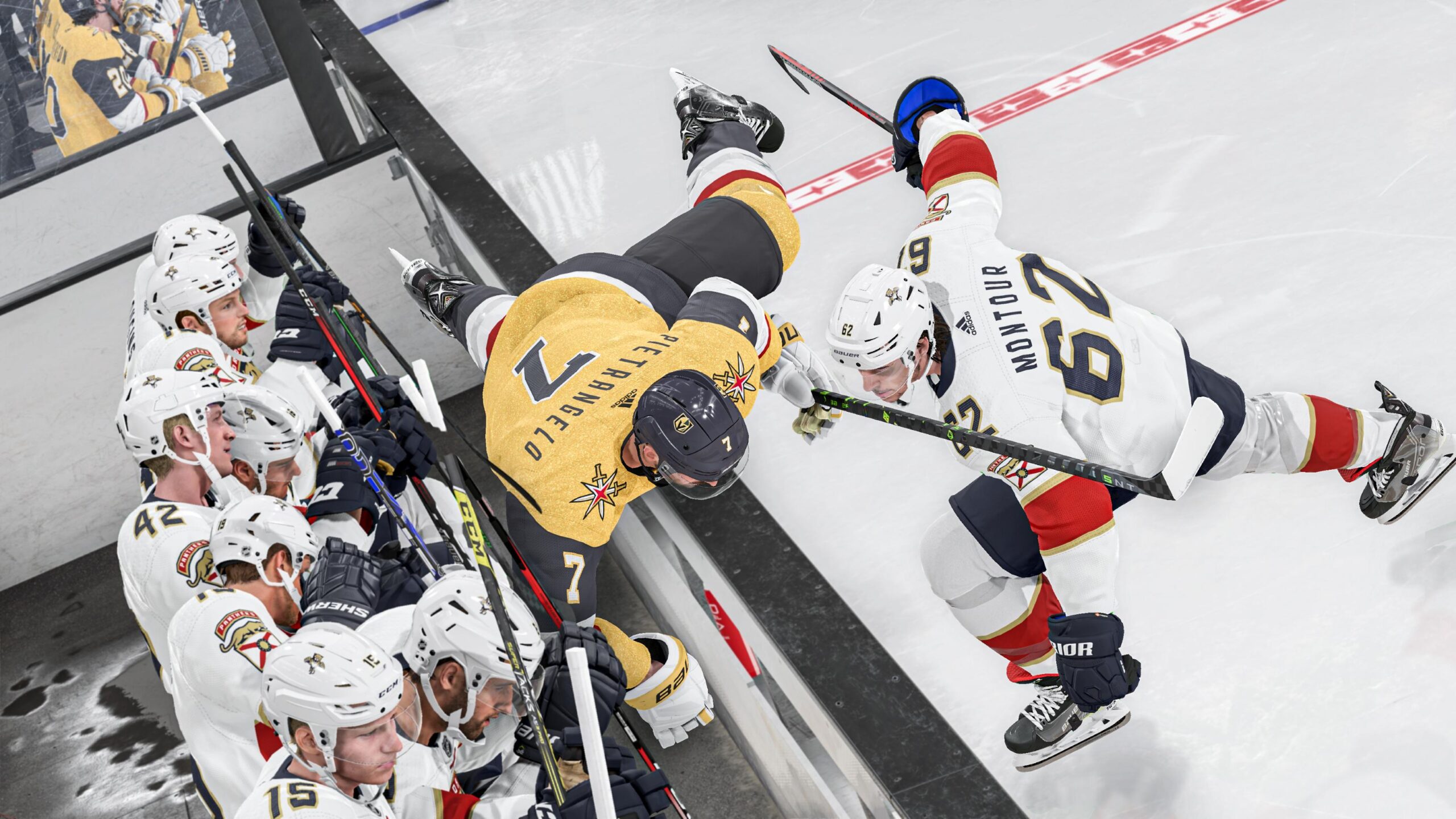
Instead of treating every defensive contact as an automatic turnover, games can evaluate stick position, skating angle, timing and puck location. A defender approaching from the wrong side may fail to reach the puck, while a well-timed poke check can interrupt possession without producing an unrealistic collision.
This encourages players to think about spacing rather than simply chasing the puck carrier. Defensive positioning becomes more important because attackers can punish an overly aggressive challenge with a quick directional move.
A balanced system generally needs several defensive responses:
- Poke checks that depend on distance and angle
- Body positioning that blocks skating lanes
- Stick pressure that limits puck movement
- Controlled contact near the boards
- Recovery animations after missed defensive attempts
When these mechanics work together, one-on-one situations become short tactical battles instead of predetermined animations.
Animation quality matters more than visual detail
Stick handling also highlights an interesting shift in mobile sports design. A game does not need extremely detailed graphics to make puck control feel convincing. Animation timing often matters more.
Players notice when the stick suddenly jumps from one position to another or when the puck appears disconnected from the blade. Smooth transitions between skating, turning, receiving passes and changing puck position create a stronger sense of control even on relatively modest hardware.
Developers can therefore improve the feel of a hockey game without dramatically increasing graphical demands. Well-designed animation blending, accurate stick placement and responsive input can have a larger gameplay impact than adding higher-resolution textures or more complex arena lighting.
Different players can use the same system differently
One of the strongest advantages of deeper stick handling is that it creates room for individual playing styles. Aggressive players may use quick dekes to attack defenders directly, while more patient users can protect possession and wait for teammates to move into better positions.
The same mechanic can support several approaches:
- Speed-focused players can combine puck movement with rapid directional changes.
- Possession-oriented players can slow the game down and protect the puck.
- Passing-focused players can manipulate defenders before creating an open lane.
- Shooting-focused players can reposition the puck before releasing a shot.
This variety helps matches feel less scripted because success is not tied to a single optimal attacking pattern.
Why mobile hardware is making these systems possible
Modern smartphones also give developers more room to improve these mechanics. Faster processors allow games to evaluate player position, puck movement and nearby defenders continuously rather than relying on rigid animation sequences.
Higher touch sampling rates can detect short gestures more accurately, while improved frame rates make rapid directional changes easier to read. These improvements may sound technical, but they directly influence how responsive a hockey game feels during close control situations.
The challenge is maintaining that responsiveness across a wide range of devices. A successful mobile hockey game still needs handling mechanics that remain predictable at lower frame rates and on smaller screens. That makes scalable animation and input systems particularly valuable.
Stick handling can add depth without slowing matches down
Mobile sports games usually need to remain accessible during short sessions, so developers cannot simply add complexity for its own sake. The most effective stick handling systems provide additional options without forcing every player to master them immediately.
A newcomer can still skate, pass and shoot using basic controls, while experienced players gradually discover techniques for protecting the puck, changing direction and creating better attacking angles. This layered design allows the same game to remain approachable while providing more room for improvement.
That balance is especially useful in hockey because the sport naturally combines speed with close control. When puck handling responds smoothly to player intent, a short mobile match can contain far more meaningful decisions without becoming slower or harder to understand.
The next step for mobile hockey controls
Stick handling is becoming one of the areas where mobile hockey games can distinguish themselves without adding more menus, progression systems or visual effects. Better puck control directly changes what happens during every possession, which gives the mechanic a much larger influence than many cosmetic features.
As touchscreen input becomes more precise and contextual control systems improve, developers have an opportunity to make puck possession feel increasingly natural. The most successful designs will probably not be the ones with the largest number of moves, but the ones that make a small set of actions feel dependable, responsive and useful in different situations.
For mobile hockey games, that could be an important step toward matches that remain fast enough for smartphones while offering enough depth to keep experienced players interested.