Mobile sports games have traditionally relied on competition to keep players engaged. Ranked matches, PvP tournaments, and online leaderboards have been central to the genre for years.
However, a noticeable shift is taking place across the industry. In 2026, many developers are placing greater emphasis on daily progress systems rather than focusing exclusively on competitive gameplay.
The goal is simple: encourage consistent player engagement through achievable daily rewards and long-term progression.
The Rise of Habit-Based Gaming
Mobile gaming behavior has changed significantly over the past few years.
Many players no longer spend hours in a single session. Instead, they interact with games multiple times throughout the day in shorter bursts.
Developers have adapted by creating systems that reward regular participation rather than only rewarding competitive success.
Common examples include:
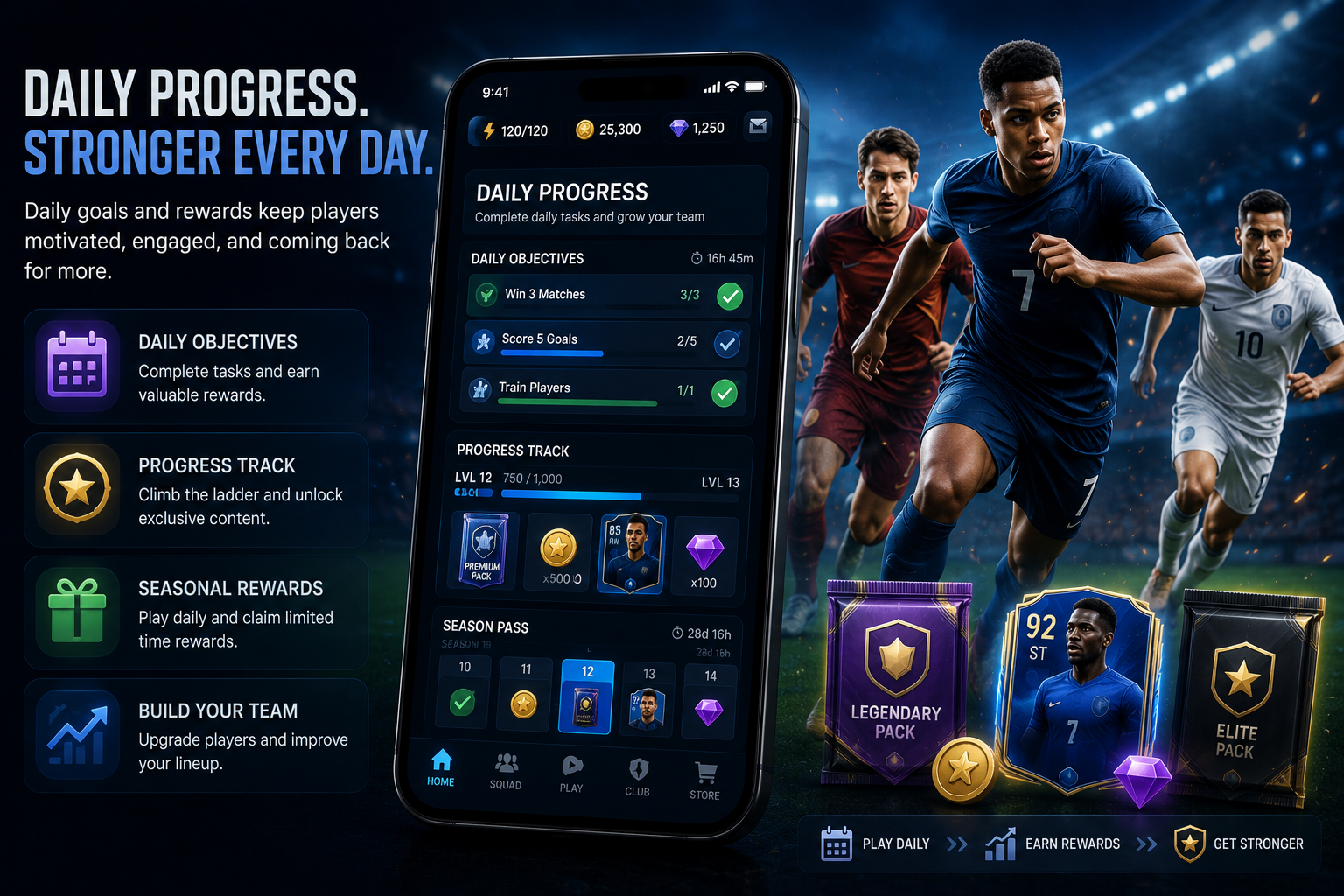
- Daily login rewards
- Weekly progression tracks
- Seasonal challenges
- Skill development milestones
- Collection systems
- Daily training objectives
These mechanics create a sense of progress even during brief play sessions.
Retention Is Becoming More Important Than Competition
While competitive gameplay remains valuable, developers increasingly recognize that only a small percentage of players actively pursue top rankings.
Most players simply want enjoyable progression and visible rewards.
Daily systems help address this by offering:
| Traditional PvP Focus | Daily Progress Focus |
|---|---|
| Win-dependent rewards | Consistent progression |
| Competitive pressure | Casual engagement |
| Leaderboard rankings | Personal milestones |
| High skill requirements | Accessible goals |
| Short-term excitement | Long-term retention |
This approach appeals to a much broader audience.
Sports Games Are Becoming More Personalized
Another reason for this trend is personalization.
Modern mobile sports games increasingly track player behavior and recommend challenges based on individual activity patterns.
Rather than forcing every user into identical objectives, many games now offer adaptive progression systems that feel more relevant to different play styles.
This helps maintain engagement over longer periods.
Seasonal Content Is Driving Daily Activity
Seasonal events have become a major part of mobile sports gaming.
Developers regularly introduce:
- Limited-time tournaments
- Event currencies
- Exclusive player cards
- Daily challenge ladders
- Seasonal reward passes
These systems encourage players to return regularly without requiring lengthy gaming sessions.
The result is stronger engagement throughout an entire season.
Mobile Players Value Consistent Progress
One of the biggest lessons developers have learned is that progress often matters more than victory.
Many users enjoy seeing their team improve, unlocking new content, completing objectives, and advancing through reward systems.
Daily progress mechanics provide these moments consistently, regardless of skill level.
This creates a more satisfying experience for both competitive and casual audiences.
The Future of Mobile Sports Games
As mobile gaming continues evolving, daily progression systems are likely to become even more sophisticated.
Future sports games may combine AI-driven personalization, adaptive challenges, and dynamic reward structures to create highly individualized progression experiences.
While competition will always remain an important part of sports gaming, the industry is increasingly discovering that long-term player retention often comes from habits, consistency, and meaningful progress rather than leaderboards alone.