Sports games have spent decades trying to make virtual athletes look like their real-world counterparts. Developers scan faces, recreate arenas, record commentary and reproduce everything from uniforms to goal celebrations. In 2026, however, hockey games are moving into a less visible area of authenticity: making teams behave like the teams they represent.
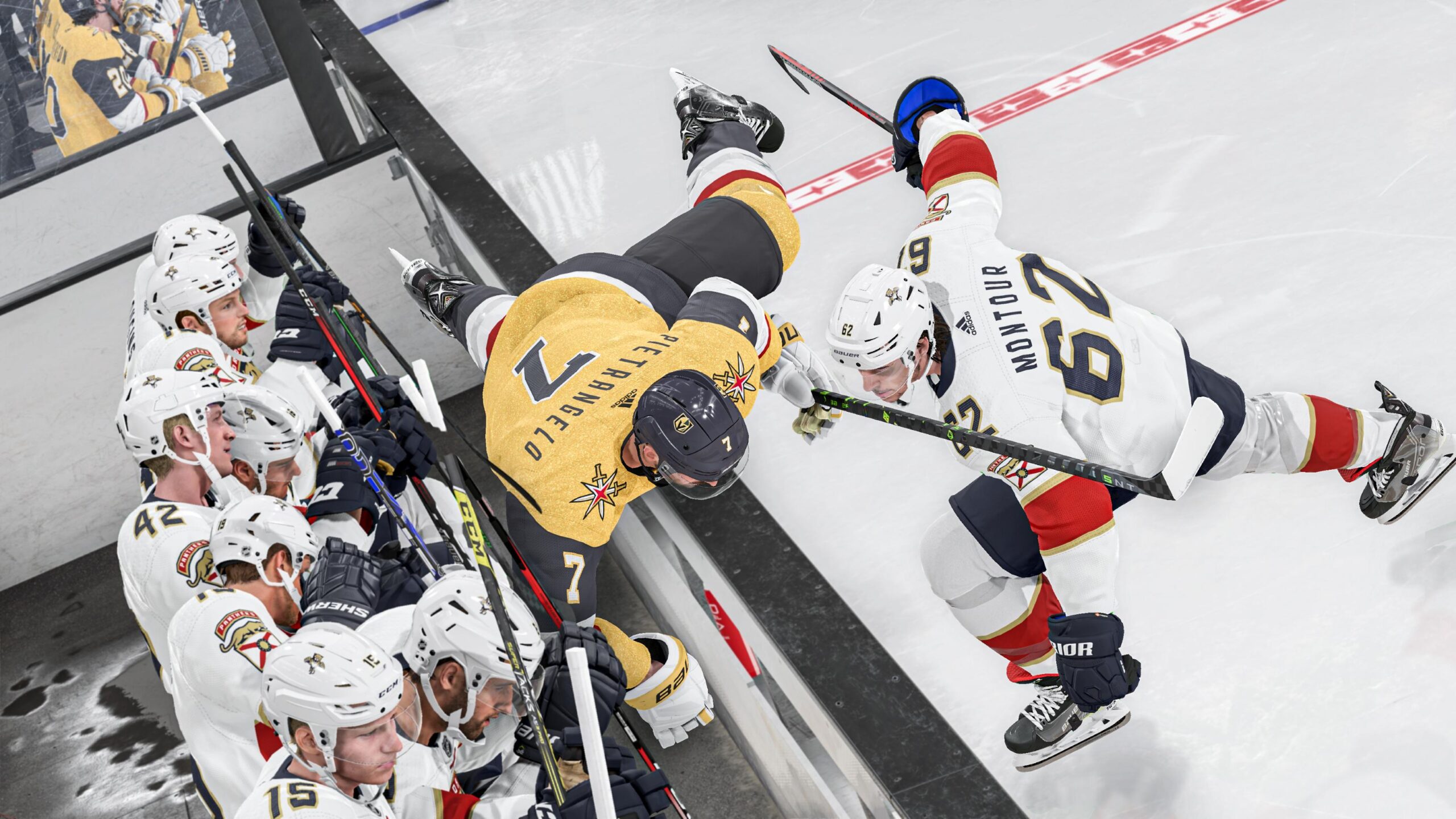
EA Sports has taken a significant step in that direction with NHL 27. Instead of giving every NHL team variations of the same small collection of tactical presets, the game now features individual team-specific playbooks built with real NHL EDGE positional data. The goal is not simply to make players faster or more accurate according to statistics. It is to reproduce differences in how entire teams move, attack, defend and transition across the ice.
That shift illustrates a wider opportunity for sports games. Real-world tracking data can influence not only ratings on a player card but also the decisions made by AI-controlled teammates and opponents.
Sports Games Have Traditionally Used Data for Ratings
Real sports statistics are hardly new to gaming. Developers have long used goals, assists, shooting percentages, speed and other performance measures when assigning ratings to virtual athletes. The result is familiar to almost anyone who has played a licensed sports game. A fast real-world athlete receives a high speed rating, an elite scorer gets better shooting attributes and a strong goalkeeper receives superior saving statistics. That approach represents individuals reasonably well, but it does not necessarily reproduce how their teams actually play.
Two hockey clubs could contain players with similar overall ratings while approaching matches very differently. One might aggressively forecheck after losing possession, while another protects space and waits for mistakes. Some teams prefer controlled zone entries; others use dump-and-chase more frequently. Defensive structures, breakout routes and support positions can also vary. If the AI underneath those teams follows the same tactical template, much of their real identity disappears.
NHL 27 Is Using Data Differently
NHL 27 attempts to address that problem through team-specific playbooks. EA says all 32 NHL teams now have individual playbooks built directly from NHL EDGE positional data. Instead of choosing among three broad presets, teams can demonstrate different tendencies across the defensive, neutral and offensive zones.
The difference can affect several parts of a match.
| Real-world tendency | Possible in-game effect |
|---|---|
| Aggressive forecheck | More pressure after possession changes |
| Controlled zone entry | Players carry or pass instead of immediately dumping |
| Dump-and-chase preference | Forwards attack space behind defenders |
| Defensive shell | AI protects particular areas when leading |
| Breakout structure | Teammates provide different outlet options |
| Support positioning | Off-puck players occupy different passing lanes |
These differences are more subtle than introducing a new shot animation or arena. They may nevertheless have a greater effect on how matches actually feel. Playing against another team can become a tactical change rather than simply a change of uniforms and player ratings.
NHL EDGE Provides a New Type of Raw Material
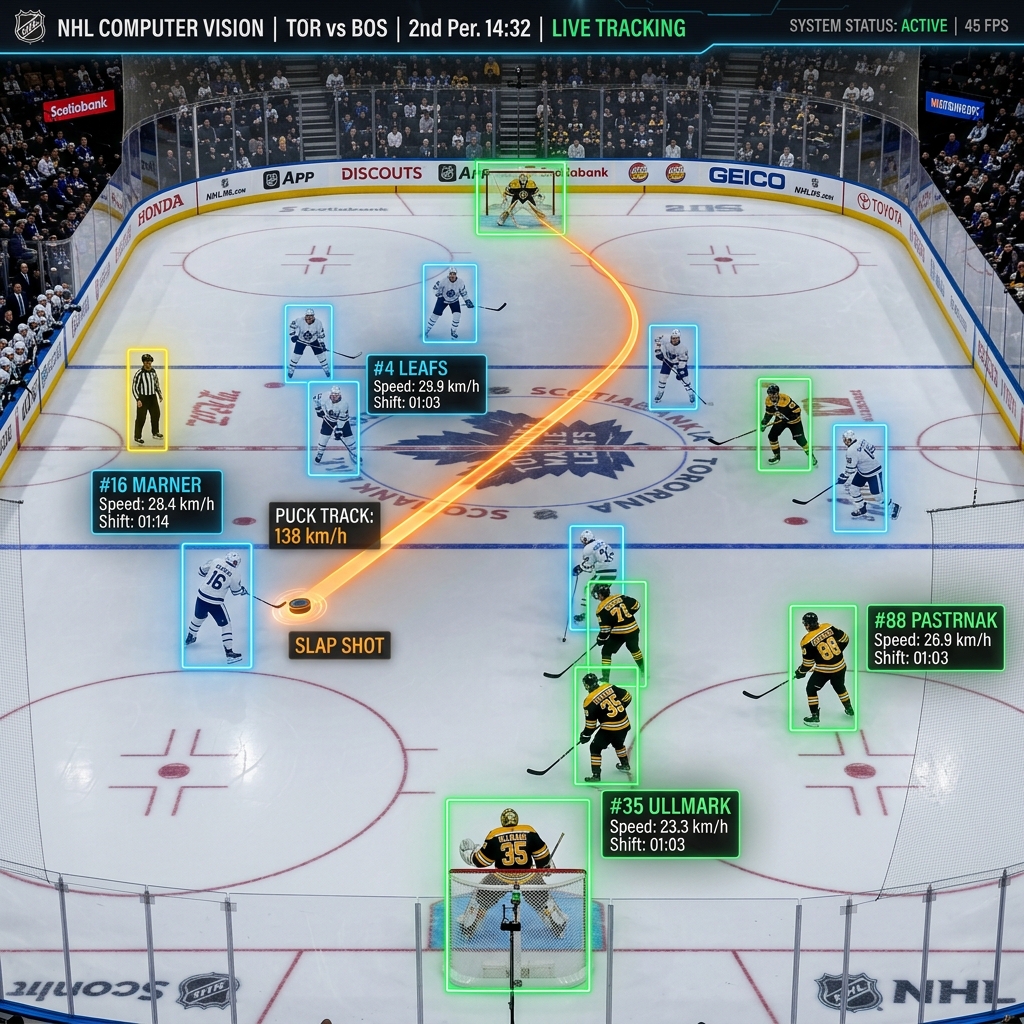
The development is possible because professional sports now generate enormous amounts of tracking information. NHL EDGE uses puck and player tracking technology to record movement during NHL games. Data can describe elements such as skating speed, distance travelled, shot location and puck movement. The system gives teams, broadcasters and fans information that would have been extremely difficult to collect consistently in earlier eras.
For game developers, tracking creates another potential resource. Traditional statistics describe the outcome of actions. A box score can tell us who scored, who assisted and how many shots a team generated. Positional tracking can help describe what happened between those headline events.
Where were players standing? How did they move through different zones? Which routes did they use? How aggressively did a team pressure possession? Those patterns are precisely the kind of information needed to make AI-controlled teams behave differently.
Better AI Does Not Necessarily Mean Harder AI
There is an important distinction between intelligent sports-game AI and difficult sports-game AI. A developer can make an opponent harder relatively easily by increasing speed, accuracy or reaction time. The computer begins completing more passes, winning more battles and converting more opportunities.
That does not automatically make it believable. An opponent can be extremely difficult while still making repetitive tactical decisions. Conversely, AI can become more authentic without receiving unrealistic advantages if it makes better choices about positioning and team structure. Real-world data offers a path toward the second approach.
Instead of asking the AI to react faster than a human player, developers can ask it to recognize situations and follow appropriate tactical tendencies. A defender may hold position rather than chase the puck. A forward may provide an outlet during a breakout. An attacking team may alter its approach depending on whether open ice is available. The challenge comes from making those decisions readable enough that players understand what is happening.
Team Identity Can Make Seasons Less Repetitive
One of the recurring problems in sports games is repetition. A season or franchise mode may contain dozens of matches, but those matches lose variety when every opponent behaves similarly. Different rosters help, yet recognizable team strategies can create another layer of variation. Consider playing three consecutive opponents.
The first pressures aggressively and tries to recover possession quickly. The second allows more space in the neutral zone but protects the dangerous area near its net. The third repeatedly attempts controlled entries and maintains possession rather than sending the puck deep. The controls have not changed between those games. The rink has not changed either. What changes is the problem the player has to solve. That can produce replay value without relying entirely on new rewards, cards or game modes.
Data-Driven Playbooks Still Need Good Game Design
Real data does not automatically create a good sports game. A professional hockey team operates within a level of complexity that would be overwhelming if reproduced literally on a smartphone or console. Players make countless adjustments during a match based on coaching instructions, score, fatigue, opponents and individual judgment.
A video game needs to simplify those patterns. Developers therefore have to decide which tendencies are important enough for players to notice and which should remain behind the scenes. Too little differentiation makes teams feel identical. Too much complexity can make AI behaviour difficult to understand.
There is also a risk of confusing authenticity with rigid scripting. A team that frequently uses one strategy in real life should not necessarily repeat the same action every possession inside a game. Good implementation requires probabilities rather than predetermined sequences. Data can influence what a team prefers without guaranteeing exactly what it will do.
The Same Idea Could Work Particularly Well on Mobile
The concept has interesting implications for mobile sports games because smarter AI does not necessarily require more touchscreen controls. Mobile games face a permanent interface constraint. A controller can offer sticks, triggers, shoulder buttons and numerous combinations, while a phone has limited screen space. Adding tactical depth by adding more buttons quickly becomes impractical.
Improving AI behaviour takes another route. The player can continue using familiar controls while computer-controlled teammates become better at positioning themselves, providing passing options and responding to situations.
For a mobile hockey game, that might mean:
- defenders maintaining more appropriate gaps automatically;
- wingers choosing sensible breakout routes;
- forwards adjusting their position during sustained pressure;
- teams changing forecheck behaviour according to the score;
- AI recognizing when possession should be protected rather than immediately advanced.
The user does not need five additional buttons to benefit from any of those improvements. This makes data-driven AI particularly attractive for mobile sports design. Complexity can increase underneath the interface while the visible controls remain accessible.
Live Data Could Eventually Make Sports Games More Dynamic
NHL 27’s playbooks also raise a bigger question: how frequently should a sports game’s tactical model change? Traditional sports titles are largely snapshots. Developers evaluate teams before release, establish ratings and strategies, and then make adjustments through patches or roster updates.
Modern data infrastructure creates the possibility of something more dynamic. If a real team changes its approach during the season, future games could theoretically adjust its virtual tactical profile. A coaching change might alter defensive behaviour. A team that begins using a different breakout structure could gradually behave differently in-game.
There are obvious limitations. Real data needs interpretation, and constantly changing AI could make competitive balance unpredictable. Developers would also need to avoid overreacting to small samples. Still, the underlying possibility is important. Sports games could evolve from representing how teams were expected to play at launch toward reflecting how they are actually playing during the season.
NHL 27 Is Already Showing Why Feedback Still Matters
Data does not eliminate the need for human testing. NHL 27 launched worldwide in September, and EA has already been adjusting gameplay through updates based partly on community feedback. Its second major update, scheduled for September 29, addresses gameplay issues including physical-contact penalties and online desynchronization alongside fixes across Connected Franchise, World of Chel and Hockey Ultimate Team.
This combination is likely to remain important. Real-world tracking can tell developers how professional teams behave. Game telemetry can reveal how players interact with the resulting systems. Community feedback can then identify situations where theoretically realistic behaviour does not feel enjoyable or understandable.
Those three sources answer different questions.
| Source | What developers can learn |
|---|---|
| Real sports tracking | How athletes and teams actually behave |
| In-game telemetry | How players use the game systems |
| Community feedback | What feels confusing, unfair or unrealistic |
The strongest sports AI may eventually depend on all three rather than treating any single dataset as the complete answer.
Sports Games Are Starting to Simulate Decisions, Not Just Athletes
Visual authenticity will always matter. Fans want recognizable players, accurate uniforms and arenas that resemble the places they see on television. But sports are ultimately defined by decisions. Where a defender moves when possession changes, whether a forward attacks open ice, how a team exits its defensive zone and when it applies pressure can shape a match more than another improvement to facial detail.
NHL 27’s use of positional data is interesting because it moves sports-game authenticity into that less visible territory. The objective is no longer only to make a virtual NHL team look correct. The game is beginning to use real information to make that team behave differently as well.
For mobile sports games, that direction may be especially valuable. Developers cannot endlessly add buttons to a touchscreen, but they can make the players behind those buttons increasingly intelligent. If real-world tracking data continues becoming more detailed and accessible, the next major improvement in mobile sports games may happen largely behind the scenes — in teammates that finally seem to understand where they should be and what they should do next.