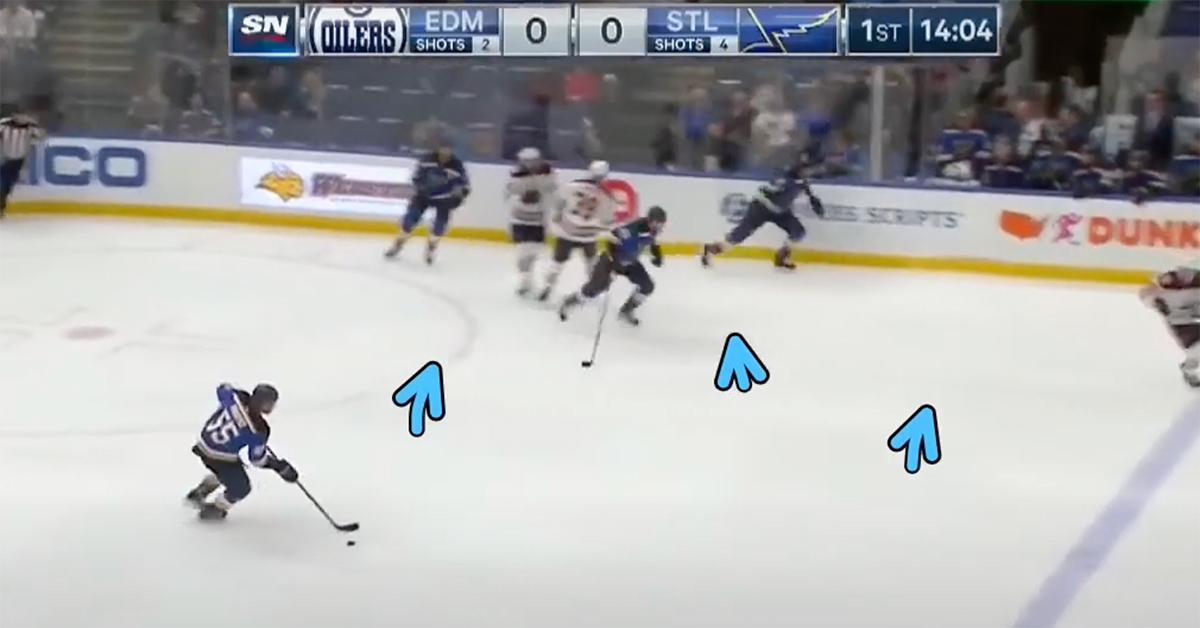
Carrying the puck across the blue line is not always the safest way to enter the attacking zone. When defenders are positioned well and there is little open ice ahead, a hockey team can send the puck deep into the zone and immediately chase it instead. The move may look like giving up possession, but in the right situation it can create pressure that would have been difficult to generate through a direct entry.
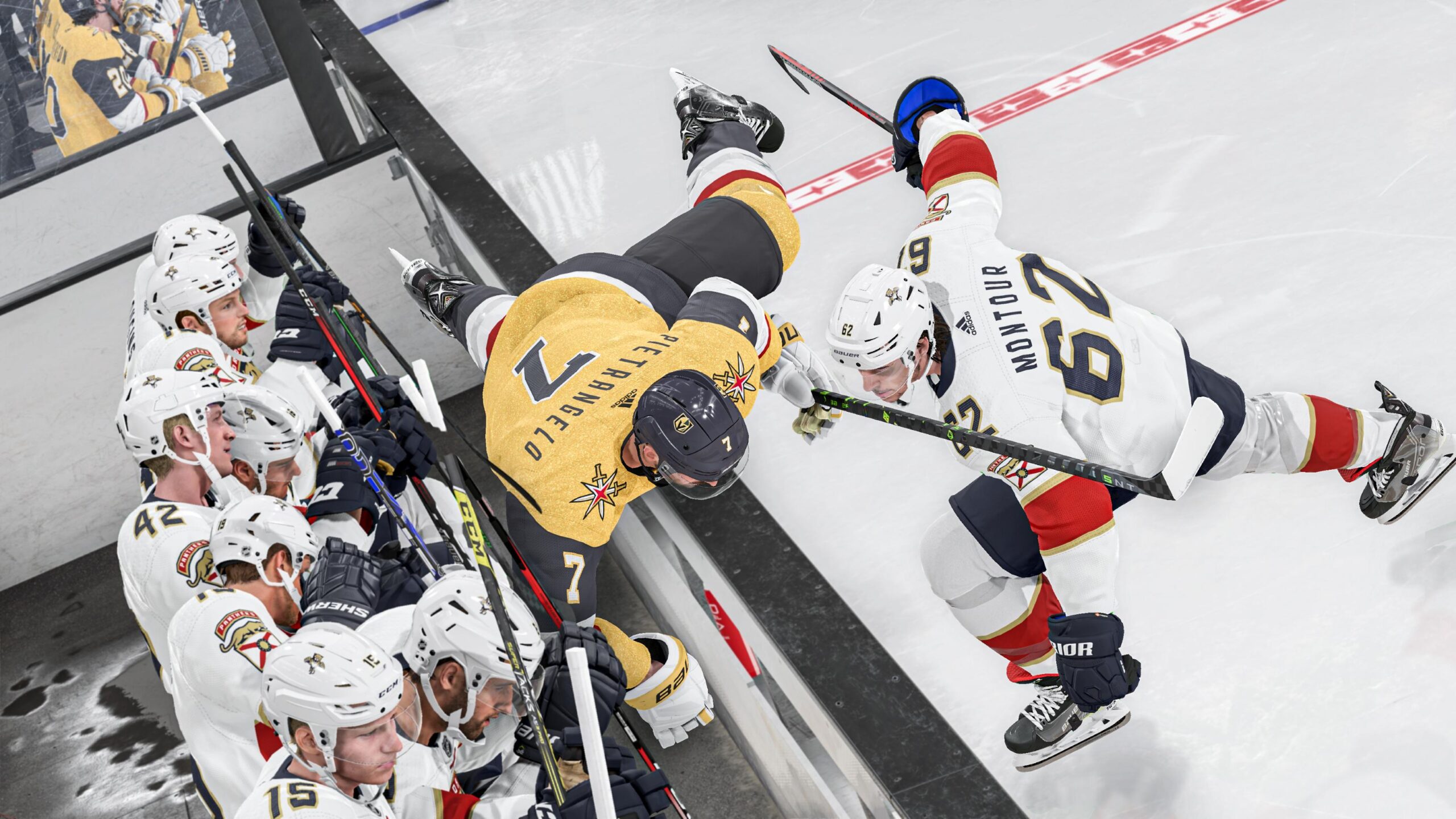
That decision is becoming increasingly relevant as hockey games improve their understanding of possession. EA’s first major NHL 27 update in September 2026 included a notable adjustment to CPU behavior: forwards should now keep the puck rather than unnecessarily dumping it when they have open space. The change highlights an important design problem. A convincing hockey game needs to understand not only how to dump the puck, but when doing so actually makes sense.
For mobile hockey games, dump-and-chase can add this tactical choice without demanding complicated controls. The player still needs to skate, pass and pursue the puck, but the way an attacking move begins can change completely.
Dumping the Puck Is a Decision, Not Just a Clearance
A dump occurs when the attacking team deliberately sends the puck deep into the offensive zone instead of attempting to carry it through the defenders. The puck may travel around the boards, into a corner or behind the goal before attacking players pursue it. From a simple gameplay perspective, this can look wasteful. Why deliberately send the puck somewhere a teammate does not already control? The answer is space.
If defenders are holding the blue line effectively, trying to skate directly through them can result in an immediate turnover. Sending the puck behind those defenders changes the problem. Instead of trying to beat them while carrying possession, attackers force everyone to turn, skate back toward their own goal and compete for the puck from a new position. The attacking team temporarily gives up direct control in exchange for a chance to recover possession deeper in the zone.
Carry or Dump Creates a Useful Tactical Choice
A good hockey game should not make one type of zone entry correct in every situation. Carrying the puck works best when the player has enough space to cross the blue line while maintaining control. Dumping becomes more attractive when defenders have closed those routes.
This produces a simple but meaningful decision:
| Situation | Possible approach | Main advantage |
|---|---|---|
| Open ice ahead | Carry the puck | Maintain direct possession |
| Defender backing away | Carry and attack | Use available space |
| Blue line heavily defended | Dump the puck | Bypass the defensive line |
| Fast forwards approaching | Dump and chase | Pressure the retrieval |
| Team needs a line change | Safe dump | Create time to change players |
The mechanic becomes interesting because the correct option depends on what is happening on the ice. Players are not simply performing a predetermined move when they reach the blue line. They are reading the defense.
The Chase Is More Important Than the Dump
Sending the puck into the corner is only the first half of the play. If nobody pressures the defender who retrieves it, the defending team may simply collect the puck and begin its own attack.
The chase therefore determines whether the strategy succeeds. A forward arriving quickly can force the defender to make a decision before there is time to survey the entire rink. The defender may need to move the puck immediately, protect it along the boards or attempt a quick pass to a teammate.
That pressure can create mistakes. For a mobile hockey game, this means the mechanic should not end when the player swipes or taps to send the puck deep. Teammate movement and AI reactions immediately afterward are just as important. Without a convincing chase, the dump becomes little more than voluntarily losing possession.
Puck Placement Changes the Entire Play
Not every dump should produce the same result. Where the puck enters the zone can influence who reaches it first and what happens afterward. Sending it directly toward the goalkeeper creates a different situation from placing it softly into a corner. A hard puck around the boards may travel behind the net and emerge on the opposite side, while a shorter dump can create a race closer to the blue line.
That gives players another layer of control. A simple mobile implementation could allow direction and input strength to influence puck placement without adding several new buttons. A directional swipe could determine the side of the rink, while the length or speed of the gesture influences how hard the puck is sent. The controls remain compact, but the outcome is no longer identical every time.
Player Speed Matters During Retrieval
Dump-and-chase also gives skating attributes a practical purpose. A fast winger may be particularly effective at reaching loose pucks before defenders. A stronger player might be less likely to arrive first but more capable of protecting the puck after contact near the boards. Another player may be useful because of awareness or passing ability once possession is recovered.
This makes player differences visible through gameplay rather than only through rating screens. The mechanic can therefore connect several systems at once: skating speed, acceleration, physical play, puck control and AI positioning all influence whether the attacking team successfully turns a dump into possession. That creates more depth without requiring each attribute to have its own isolated mechanic.
Defensive AI Needs to Recognize the Race
The defending team faces its own set of decisions. When the puck is dumped behind the defense, the nearest player needs to judge whether there is enough time to retrieve it cleanly. Another defender may need to provide a passing option, while forwards move into positions that support a breakout. Poor AI becomes obvious very quickly in these situations.
A defender who casually skates toward a loose puck while an attacker approaches at full speed can make the game feel artificial. So can a teammate who remains stationary instead of providing an escape route. Good defensive AI should understand that puck retrieval is a temporary race with changing pressure. The amount of available time matters.
Mobile Controls Need to Keep the Action Simple
Dump-and-chase could easily become too complicated on a touchscreen if developers try to reproduce every possible variation manually. Mobile hockey works better when tactical depth comes from context rather than an excessive number of controls. The player should be able to perform the action quickly and then concentrate on what happens next.
One approach is to make the existing pass or shoot gesture context-sensitive. Near the attacking blue line, directing the puck toward open ice behind defenders could naturally create a dump rather than requiring a dedicated button.
Another option is a simple gesture modifier that distinguishes a controlled pass from a deliberate deep puck. The exact control scheme matters less than consistency. Players need to understand why a particular input produced a dump and be able to repeat it intentionally.
Bad Dumping Should Have Consequences
If dumping the puck is always safe and effective, there is little reason to attempt controlled entries. The defending team should sometimes recover comfortably.
A poorly placed puck may travel directly to a defender. A dump performed without nearby teammates may give the opponent several seconds to organize a breakout. Sending the puck too hard could allow it to travel somewhere the attacking team cannot reach efficiently.
This creates an important balance. Successful dump-and-chase play should depend on timing, positioning and team support rather than functioning as an automatic shortcut around defenders. The player needs to see the trade-off: control is being surrendered now in the hope of recovering the puck under better conditions a moment later.
AI Should Know When Not to Dump
This is where the recent NHL 27 adjustment becomes particularly interesting. In its September Update 1, EA specifically changed CPU forwards so that they would maintain possession instead of unnecessarily dumping the puck when they had space. The issue demonstrates how even a legitimate hockey tactic can look wrong when AI uses it without understanding the situation.
If a forward has open ice ahead, voluntarily sending the puck away can appear irrational. If several defenders are waiting across the blue line, the same action can make sense.
The animation itself has not changed. The intelligence lies in choosing the correct moment. For mobile games, contextual decisions like this can often improve realism more effectively than simply adding another visual effect or control option.
Dump-and-Chase Can Change Match Rhythm
Controlled possession tends to create one rhythm. The puck carrier slows, looks for space, passes and attempts to construct an attack. Dump-and-chase creates another.
The puck suddenly moves behind the defense, several players accelerate toward it and possession becomes uncertain. For a few seconds, both teams are reacting to the same loose puck rather than following an established formation.
That variation is useful in short mobile matches. A game does not need dozens of special events to prevent every attack from feeling identical. Different methods of entering the zone can naturally create different sequences. One possession might become a passing attack. The next could become a race into the corner.
Board Physics Become More Important
A puck sent into the offensive zone often interacts with the boards before anyone reaches it. That means dump-and-chase systems also expose the quality of puck physics. The angle of contact should influence where the puck travels. A hard rim around the boards should behave differently from a softer puck placed into a corner.
Predictability is important here. Players do not need perfectly simulated real-world physics, particularly in an arcade-oriented mobile game, but they should gradually learn how the puck behaves when sent toward different parts of the boards. Once that behavior becomes readable, the boards stop functioning merely as the boundary of the rink. They become part of the play.
Line Changes Give the Dump Another Purpose
Not every dump is designed to create an immediate scoring chance. Sometimes a team simply needs enough time to replace tired players. Sending the puck safely into the opponent’s end can move play away from the team’s own goal while fresh skaters enter the rink. That gives the mechanic another tactical purpose if a mobile hockey game models stamina and line changes.
This is useful because the same action can serve different objectives depending on context. An aggressive dump aims to recover the puck. A safer dump may prioritize time and territory. Players can therefore begin reading not only where to send the puck, but why they are sending it there.
Visual Feedback Can Explain the Strategy
Because some players may initially interpret every dump as lost possession, visual feedback can help communicate what is happening. The game does not need a large tutorial overlay. Small cues can be enough. Teammates immediately accelerating into the zone show that a chase has begun. A highlighted loose puck can make the retrieval race easier to follow on a small screen. Camera framing can keep both the puck and the nearest skaters visible.
These details are particularly important on mobile devices, where the entire rink cannot always remain clearly visible. Players need to understand that the action has shifted from possession to pursuit. Once that transition is readable, the tactic becomes easier to learn naturally through play.
A Simple Mechanic Can Produce Several Outcomes
The strength of dump-and-chase is that one relatively straightforward action can lead to very different situations. A clean retrieval can create sustained offensive pressure. A defender may win the race and begin a breakout. Two players may arrive simultaneously and turn the sequence into a battle near the boards. The puck might travel farther than expected and force everyone to reposition.
The variety comes from interaction between systems rather than from a complicated input sequence. That suits mobile hockey particularly well. Touchscreen sports games benefit when controls remain understandable but the decisions behind those controls continue becoming deeper.
Why Dump-and-Chase Deserves More Attention
Dump-and-chase is not as visually dramatic as a breakaway or a one-timer. The player deliberately sends the puck away, which can initially look like the opposite of skillful attacking play. Its value becomes clearer when the game properly models what happens next.
Defensive positioning determines whether a controlled entry is available. Puck placement affects the retrieval race. Player speed changes who reaches the corner first. Board physics influence where the puck travels, while teammate and defensive AI determine whether possession can be recovered.
The September 2026 NHL 27 update offers a useful reminder of the central design challenge: dumping the puck is not inherently smart or foolish. Its value depends on the situation.
A strong mobile hockey game therefore does not need to encourage players to dump the puck constantly. It needs to make the decision meaningful. When carrying the puck is dangerous and open ice exists behind the defense, sending it deep can transform a blocked zone entry into a race for possession. That moment of choice is what turns a simple clearance into a hockey mechanic.