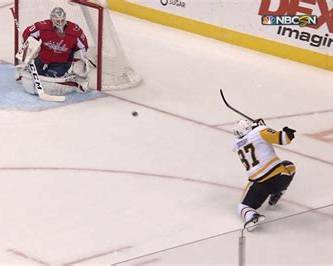
Some hockey shots begin with several touches. A player receives the puck, settles it, adjusts position and then releases the shot. A one-timer removes most of that preparation. The puck arrives from a teammate and is struck almost immediately, turning the pass and shot into one continuous attacking move.
That makes one-timers particularly interesting in mobile hockey games. They can create fast scoring chances without requiring a complicated control system, but they also demand more than simply pressing the shoot button. The passer needs to find the right angle, the shooter has to be positioned correctly, and the timing of the final input can determine whether the puck is driven cleanly toward goal or the opportunity disappears.
A One-Timer Starts Before the Shot
The final shot is the most visible part of a one-timer, but the play begins with the pass. A shooter standing in a poor position cannot create much danger regardless of how accurately the player times the final input. The puck needs to arrive along a path that allows the receiving player to strike it without first bringing it under control.
This gives passing a different purpose. Instead of always delivering the puck directly to the safest teammate, players can look for positions where a pass will immediately become a shooting opportunity. A lateral pass across the attacking zone, for example, can be more dangerous than a short forward pass even if both successfully reach a teammate.
For mobile hockey games, this creates useful depth because the controls do not necessarily need to change. The same passing system can produce different results depending on where the receiver is standing and what the player intends to do next.
Timing Turns a Simple Input Into a Skill
One-timers are well suited to touchscreen controls because the core interaction can remain compact. The player does not need a sequence of several buttons to perform the move. A tap, swipe or timed shooting input can be enough. The challenge comes from when that input occurs.
Shooting too early may cause the player to swing before the puck reaches the correct position. Reacting too late can allow the receiver to control the puck first, turning the play into an ordinary shot and giving the goalkeeper additional time to recover.
A useful mobile system can therefore create several outcomes from the same basic action:
| Timing | Possible result |
|---|---|
| Too early | Missed contact or weak attempt |
| Slightly early | Inaccurate shot |
| Well timed | Clean one-timer |
| Slightly late | Slower release |
| Too late | Puck controlled before shooting |
The exact implementation can remain forgiving in an arcade-style game while still rewarding players who learn the timing window.
Passing Angles Change the Quality of the Chance
Not every pass should produce an equally effective one-timer. The direction from which the puck arrives can make a major difference to the resulting shot. A clean lateral pass may give the shooter a strong angle because the puck travels naturally into the striking motion. A pass arriving awkwardly from behind could be much harder to connect with. The speed of the puck can matter as well: a pass that moves too slowly gives defenders time to react, while one delivered too aggressively may become difficult to handle.
This allows mobile games to make passing geometry meaningful without displaying diagrams or complicated tactical menus. Players gradually learn which positions create good shooting angles simply by seeing which combinations work during matches. The result is a mechanic that can be understood visually. When the passing lane and shooting position line up, the opportunity looks dangerous before the shot is even taken.
One-Timers Reward Off-Puck Positioning
The player without the puck becomes particularly important during this type of attack. If AI-controlled teammates remain static or drift into random positions, one-timers will feel accidental. Stronger teammate behavior can create recognizable shooting lanes by moving into open space, adjusting distance from defenders and preparing for a pass.
This does not mean the AI should constantly provide perfect opportunities. Predictable positioning would make attacks repetitive. Instead, teammates can respond to the puck carrier and defensive structure in ways that occasionally create a clear one-timer option.
For the player, this encourages attention beyond the puck. Watching where teammates are moving becomes useful because a passing opportunity may exist for only a second.
Goalkeepers Have Less Time to Reset
A major reason one-timers feel dangerous is that the goalkeeper must react to both the pass and the shot. When a puck carrier shoots directly, the goalkeeper can concentrate primarily on the shooter’s position and angle. A cross-ice pass changes the situation. The puck moves laterally, the likely shooting location shifts and the goalkeeper may need to move across the crease before the shot arrives. If the shooter releases immediately, there is little time for that movement to finish.
This gives mobile hockey games an opportunity to make goalkeeper positioning more dynamic. A goalie who instantly teleports into the perfect position would make one-timers feel ineffective, while a goalkeeper who never reacts to the pass would make them too powerful. The interesting result lies between those extremes. The goalie can begin moving with the pass but still be vulnerable if the attack is executed quickly and accurately.
Defensive Players Can Break the Passing Lane
One-timers also create a clear defensive objective: stop the puck before it reaches the shooter. A defender does not always need to challenge the puck carrier directly. Holding position between the passer and the potential shooter can remove the most dangerous option. Another defender may pressure the receiver closely enough that there is no room to complete the shooting motion.
This gives the defense several possible responses:
- pressure the puck carrier before the pass;
- occupy the passing lane;
- stay close to the intended shooter;
- force the attack toward a weaker angle;
- intercept or deflect the cross-ice puck.
These choices help prevent one-timers from becoming a repeatable scoring trick. If defenders recognize the pattern, players need to disguise the pass or create the opportunity through movement.
The Mechanic Makes Passing More Valuable
Hockey games can become repetitive when the easiest attacking strategy is simply to skate toward the goal and shoot whenever space appears. One-timers give players a reason to move the puck even when the current puck carrier technically has a shooting opportunity.
A direct shot may be available, but a pass to the opposite side could produce a better chance. The player therefore has to compare immediate safety with potential quality.
That decision is valuable because it changes how possession is viewed. Passing is no longer only a way to move around defenders. It becomes part of the shooting mechanic itself. Well-designed one-timers can therefore encourage more varied attacks without artificially forcing players to complete a certain number of passes.
Player Attributes Can Influence the Result
If a hockey game includes individual player attributes, one-timers provide a natural place for several of them to matter. A player with strong shooting accuracy might be better at directing difficult attempts. High shot power could increase the speed of clean contact, while strong offensive awareness might help AI-controlled players move into better receiving positions.
Passing attributes can matter at the other end of the sequence. A more accurate passer can deliver the puck into a useful shooting zone rather than forcing the receiver to adjust.
Possible influences include:
| Attribute | Possible effect |
|---|---|
| Passing accuracy | Quality of puck delivery |
| Shot accuracy | Ability to direct the attempt |
| Shot power | Speed of clean contact |
| Offensive awareness | Quality of off-puck positioning |
| Reaction | Timing tolerance |
| Handedness | Preferred shooting angle |
The key is making those differences noticeable without allowing ratings to replace player skill completely.
Handedness Can Create Natural Shooting Sides
Left- and right-handed shooters can add another layer to one-timer positioning. A player positioned on the opposite side from their shooting hand may be able to open their body toward the pass and goal more naturally. This is one reason certain cross-ice combinations look particularly dangerous: the shooter is already prepared to strike the puck as it arrives.
Mobile games do not need a full tactical simulation to make use of this idea. Even a simplified preference for certain receiving angles can make different players feel distinct.
It can also encourage lineup experimentation. A player may discover that two strong attackers work better in particular positions because their passing and shooting orientations complement each other.
One-Timers Can Make Power Plays More Dangerous
One-timers become especially noticeable when the attacking team has extra space. During a power play, defenders have more territory to cover and passing lanes can remain open slightly longer. Moving the puck from one side of the offensive zone to the other can force the penalty-killing formation to shift, potentially creating a brief shooting window.
The one-timer gives that movement an immediate purpose. Instead of passing repeatedly only to maintain possession, the attacking player can attempt to move defenders and create a shooting angle before the defense recovers. This connects the mechanic naturally with special-team situations without making it exclusive to them. At even strength, the same play remains possible, but space is usually harder to create.
One-Timers Need to Be Powerful Without Becoming Automatic
Any satisfying offensive mechanic risks becoming overused if it consistently produces better results than every alternative. If every cross-ice pass leads to an unstoppable one-timer, players will quickly abandon other attacking approaches. Matches can become a repeated attempt to create the same pass from the same position.
Several factors can keep the mechanic balanced:
- imperfect passes can reduce shot quality;
- defenders can intercept predictable lanes;
- difficult angles can lower accuracy;
- mistimed inputs can weaken the attempt;
- goalkeepers can anticipate repeated patterns;
- shooters may perform differently from different positions.
The objective is not to make one-timers unreliable. They should feel dangerous when properly created. The important part is ensuring that the player earns the quality of the chance through positioning, passing and timing.
Audio and Animation Help Sell the Impact
A clean one-timer should feel different from an ordinary wrist shot. The animation can show the shooter preparing before the puck arrives rather than settling it first. The sound of contact can be sharper, while the puck’s immediate acceleration helps communicate that the shot was struck directly from the pass.
Small feedback details matter because the entire action happens quickly. Players need to recognize whether they successfully performed the mechanic without stopping to inspect an indicator.
A distinct animation and sound can communicate success instantly. If the timing was poor, the resulting motion can look less controlled, reinforcing the difference between a clean one-timer and an improvised attempt.
Camera Framing Can Help Players See the Opportunity
One-timers depend on awareness of both the passer and receiver. A camera that focuses too tightly on the puck carrier may hide the teammate who is moving into shooting position.
Mobile screens make this especially challenging because developers cannot simply zoom out indefinitely. Players still need to see the puck and nearby defenders clearly.
A useful compromise is to provide enough lateral visibility during attacking possession to reveal likely passing options. Subtle indicators near the edge of the screen can also help when a teammate is just outside the visible area.
The goal is not to announce every possible one-timer. Players should still need to recognize the opportunity. The interface simply needs to provide enough information for that recognition to be possible.
Failed One-Timers Can Create Interesting Loose Pucks
Not every attempt needs to end cleanly. A mistimed shot might send the puck wide, create a rebound or leave it loose near the shooter. A defender could deflect the pass just before it arrives, changing the puck’s path and forcing everyone nearby to react.
These imperfect outcomes help one-timers connect naturally with the rest of the hockey simulation. The play does not need to resolve into either a goal or a complete failure.
A broken one-timer can produce a scramble, a counterattack or another scoring opportunity. That uncertainty keeps the mechanic from feeling like a scripted animation triggered whenever two players occupy the correct positions.
One-Timers Can Make Goals Feel More Constructed
A satisfying hockey goal does not always come from an individually difficult shot. Sometimes the quality of the entire attacking sequence creates the opening. One-timers emphasize that idea.
The player may begin by carrying the puck into the zone, drawing a defender toward one side and waiting for a teammate to move into space. A well-timed pass then forces the goalkeeper across the crease before the receiver completes the shot. The final input may take only a fraction of a second, but the goal is the result of several earlier decisions.
That makes the mechanic particularly useful in mobile hockey games. It adds tactical depth without slowing the match or requiring a complicated set of controls. Players can understand the basic idea immediately—pass and shoot without stopping the puck—while gradually learning how angles, positioning, timing and defensive pressure affect the result.
A good one-timer system turns two familiar actions into something more than their individual parts. Passing creates the shot, the shot rewards the pass, and a brief moment of coordination can become one of the fastest and most satisfying scoring plays on the ice.