
Mobile hockey games have spent years improving shooting, passing and skating because those mechanics are immediately noticeable during a match. A less obvious part of hockey is now receiving more attention: what happens before a team actually wins possession. Forechecking systems are becoming increasingly important because they determine how effectively players can pressure opponents, recover the puck and disrupt an attack before it develops.
This changes the rhythm of mobile hockey significantly. Instead of simply skating toward whoever controls the puck, players can begin thinking about angles, support positions and where the opponent is likely to move next. A good forecheck turns the offensive zone into a tactical space rather than a waiting area between shots.
Pressure Is Becoming More Structured
Older mobile hockey games often treated defensive pressure as a direct chase. The nearest player moved toward the puck carrier while everyone else remained relatively passive. That approach was simple, but it made many matches predictable because players could escape pressure using the same routes repeatedly.
Modern systems can make pressure much more coordinated. One forward may challenge the puck carrier while another blocks a passing option and a third stays higher in the zone to prevent an easy breakout. The player does not necessarily need to control every skater manually because positioning logic can help teammates respond to the situation.
This makes aggressive play more useful without turning every possession into uncontrolled chasing. Pressure becomes a calculated decision rather than a constant command to skate toward the puck.
Forechecking Creates Decisions Away From the Puck
One reason forechecking adds depth is that much of its value comes from positioning rather than direct contact. A player can influence a possession without making a hit or stealing the puck personally. Simply forcing an opponent toward the boards or preventing a pass through the middle can change the entire sequence.
That is especially useful on mobile devices, where control schemes have limited space. Developers cannot always provide dozens of dedicated tactical buttons, so systems that translate positioning into meaningful outcomes are valuable. A small movement toward the correct lane can become just as important as pressing a tackle or poke-check command. The result is gameplay where reading movement becomes increasingly important.
Different Forechecking Styles Can Change a Match
A deeper forechecking system also creates room for different strategies. Aggressive pressure may help a team recover the puck close to the opponent’s goal, but it can leave space behind the attacking forwards. Conservative pressure gives opponents more time with the puck while reducing the risk of being caught out of position.
Mobile hockey games can use these trade-offs to create tactical variety. Players may prefer heavy pressure when trailing late in a match, then switch to a more cautious approach after taking the lead. Faster teams might benefit from aggressive pursuit, while teams built around positioning could focus on controlling exits from the defensive zone. These choices create meaningful differences between strategies without requiring matches to become much longer.
Board Play Becomes More Relevant
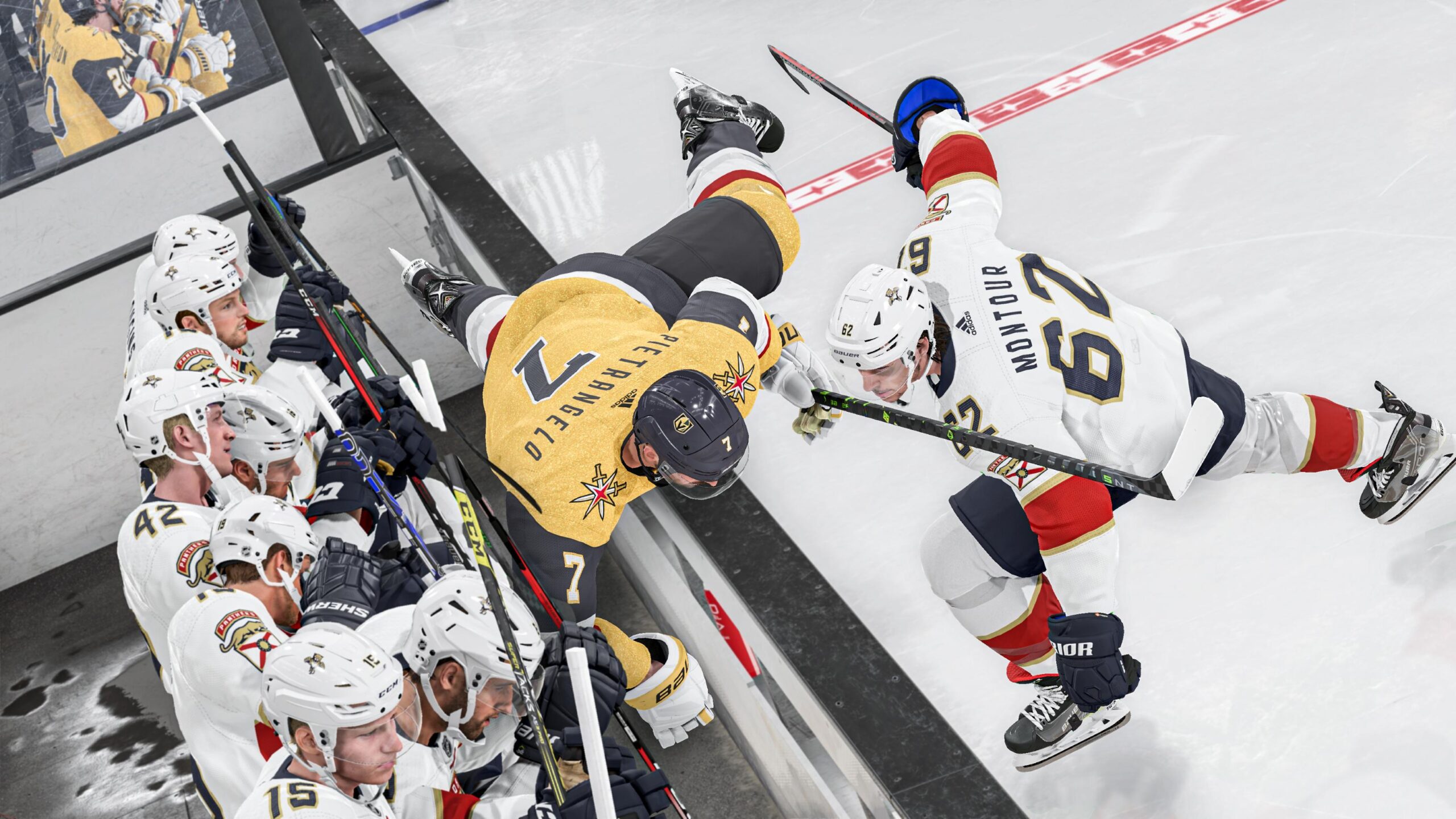
Forechecking naturally makes the boards more important. When pressure is applied correctly, puck carriers are often pushed away from open ice and toward narrower areas near the edge of the rink. That creates opportunities for possession battles, short passes and mistakes under pressure.
For mobile hockey games, this is useful because the boards can become an active part of gameplay rather than simple boundaries around the ice. Players must decide whether to protect the puck, pass quickly, reverse direction or risk carrying it through pressure.
It also makes successful breakouts feel more rewarding. Escaping a coordinated forecheck requires awareness rather than simply holding the acceleration control until open ice appears.
Smarter Teammates Make Forechecking Possible
The quality of computer-controlled teammates is crucial. A forechecking system only works when supporting players understand what the user is trying to accomplish. If teammates constantly abandon useful positions, pressure quickly becomes frustrating.
Better teammate logic can recognize whether the user is forcing an opponent left or right, which passing lanes should be covered and when a player needs to retreat. These small reactions create the impression that the entire team is responding to one situation together.
This is particularly important in mobile hockey because players frequently control only one skater at a time. Much of the tactical experience therefore depends on how intelligently the remaining team moves without direct input.
Mistakes Become More Meaningful
A stronger forechecking model also makes mistakes more interesting. Losing the puck under pressure is no longer just an isolated error. It may be the result of taking too long to pass, skating toward a crowded area or failing to recognize that an opponent has closed the safest escape route.
The same applies to the attacking team. Overcommitting several players to a forecheck can create a dangerous counterattack if the opponent escapes. That risk prevents aggressive pressure from becoming an automatic strategy. When both success and failure have clear causes, matches feel less random even when they remain fast.
Mobile Hockey Is Moving Toward Tactical Possession Battles
Forechecking may never be as visually dramatic as a breakaway or a powerful slap shot, but it influences many of the situations that lead to those moments. Better pressure systems connect skating, positioning, passing and puck recovery into a more coherent style of play.
For mobile hockey games, this represents another step away from simple end-to-end action. Players can still enjoy short matches and accessible controls, but they are increasingly being given reasons to think about what happens before possession changes hands.
As teammate logic and positioning systems improve, forechecking could become one of the mechanics that separates basic hockey games from titles that genuinely reward an understanding of how the sport flows.