
Mobile hockey games have traditionally made attacking play the easiest part of the sport to understand. Carry the puck forward, find space and create a shot. Defending was often much simpler: move toward the puck carrier, attempt a check and hope to regain possession.
That approach works well for accessible arcade games, but it becomes limiting as mobile hockey systems gain more tactical depth. Developers are increasingly making the space between attackers and defenders matter. Instead of rewarding constant pursuit of the puck, games can encourage players to maintain position, control gaps and anticipate where an attack is heading.
The result is a different type of defensive challenge. Successful defending becomes less about reacting at the last second and more about preventing dangerous situations from developing in the first place.
Defending Is Becoming a Spatial Problem
Real hockey defense depends heavily on space. A defender who moves too aggressively toward an opponent can leave an open route behind. A player who stays too deep may give the puck carrier enough room to create a high-quality opportunity. Mobile games can reproduce a simplified version of this problem without requiring complicated controls.
Imagine an attacker entering the offensive zone. The defending player has several options. They can immediately challenge for the puck, retreat toward the goal or maintain a controlled distance while forcing the attacker toward a less dangerous area.
Each choice creates a different outcome. This gives defense more purpose because positioning itself becomes part of gameplay. A player does not necessarily need to win the puck immediately to make a successful defensive play.
Gap Control Creates More Meaningful Decisions
Gap control describes the distance a defender maintains from an attacking player. It sounds like a small detail, but it can fundamentally change how a hockey game feels. An excessively large gap gives an attacker freedom. Too little space, however, can make a defender vulnerable to a quick directional change.
Well-designed mobile hockey mechanics can turn this distance into a constant tactical calculation. Players need to judge speed, direction and available support before deciding how closely to pressure an opponent. That creates decisions that cannot always be solved by pressing the same defensive button.
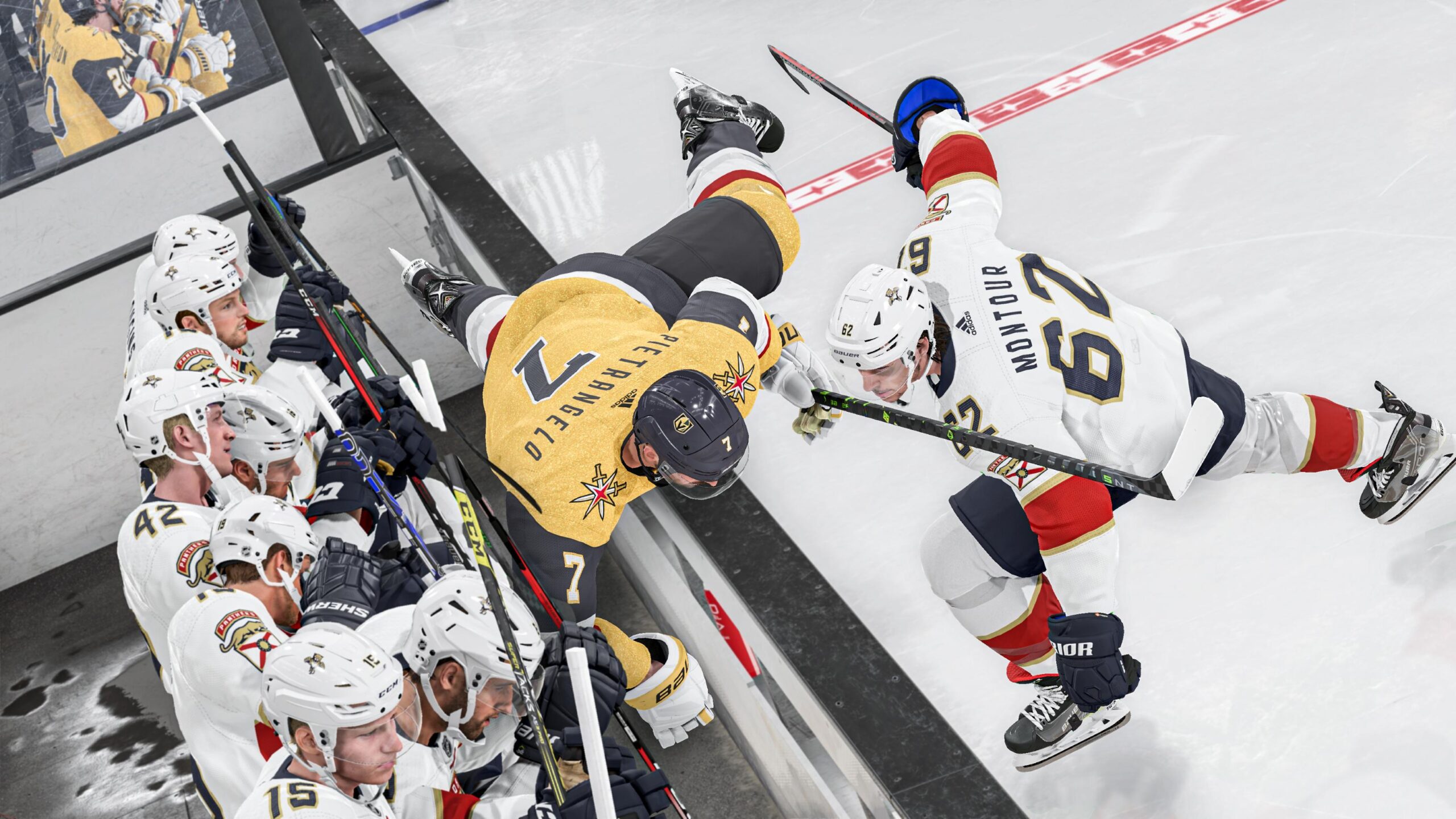
A fast attacker approaching open ice might require the defender to retreat. A slower puck carrier near the boards may provide an opportunity for more aggressive pressure. Another situation might require holding position while waiting for a teammate to recover. The controls can remain simple while the decisions become deeper.
Good Defense Does Not Always Mean Winning the Puck
One of the biggest improvements possible in mobile hockey design is recognizing defensive actions that do not immediately produce possession. Forcing an attacker wide can be successful. Blocking the most direct path toward goal can be successful. Delaying an attack long enough for teammates to return can also be successful.
Older or more arcade-focused systems sometimes struggle to communicate this. If the only visible reward comes from checks and turnovers, players naturally learn to chase the puck. More sophisticated systems can make positioning valuable on its own.
This changes how players interpret defense. Instead of asking, “How quickly can I take the puck?” they begin asking, “Where do I want this attacker to go?” That is a much more interesting tactical question.
Defensive Angles Can Make Movement Feel More Natural
Positioning is also closely connected to skating direction. A defender rarely wants to approach every situation in a straight line. The angle of movement can determine which part of the ice remains available to an attacker.
Mobile hockey games can use directional controls and contextual movement assistance to make these angles easier to manage. A player moving diagonally toward an attacker, for example, may be trying to close the route toward the center rather than attempting an immediate collision.
This can make defensive skating feel more deliberate. It also creates a useful distinction between movement with a purpose and simply following the puck. Players begin to recognize that where their defender is facing and where they are moving can be just as important as their distance from the opponent.
Better Positioning Reduces Chaotic Defensive Play
Constant puck chasing can create messy matches. Multiple defenders collapse toward one opponent, large areas of the ice become empty and possession can change repeatedly without much structure. Position-aware defensive systems help reduce this problem.
When AI-controlled teammates understand spacing, they can maintain useful positions instead of automatically moving toward the puck. One defender might pressure the puck carrier while another protects the center. A forward may stay higher in the zone to cover a potential passing option. For the player, this makes teammates more predictable.
Predictability is important because tactical decisions are difficult when AI players behave randomly. If a user knows roughly where teammates will position themselves, they can decide when to pressure and when to hold their own area. The defense begins to function as a unit rather than a collection of individual players chasing the same target.
Mobile Screens Make Defensive Clarity Especially Important
There is also a practical design challenge. Hockey is fast, while smartphone screens are relatively small. A complicated defensive system would be difficult to control if players needed to manually manage several teammates at once. Developers therefore need to communicate positioning through clear visual information and intelligent assistance.
Subtle indicators can show which player is being controlled. Movement assistance can help defenders face the play naturally. Camera positioning can provide enough visibility to judge approaching attackers without pulling too far away from the action.
The goal is not to automate defense completely. It is to remove unnecessary control friction so that the player can concentrate on decisions. This distinction matters. Assistance should make the intended action easier to perform without deciding everything for the user.
Positioning Adds Another Layer to Player Skill
Offensive skill is easy to notice. Goals, successful moves and accurate shots produce immediate feedback. Defensive skill can be quieter. A strong defensive player might prevent a shot from happening at all. They may recognize danger early, maintain the correct distance and guide an attacker into an area where very little can be created. As mobile hockey games become more competitive, these less obvious skills can help separate experienced players from beginners.
Two users may understand the controls equally well but defend very differently. One repeatedly attacks the puck and creates openings. The other manages space, waits for favorable moments and limits dangerous opportunities. That difference gives competitive matches more depth without requiring additional buttons or complex command systems.
Defensive Mistakes Become Easier to Understand
Better positioning systems can also improve learning. When defense is mostly based on tackles or checks, failure can feel binary: the player either wins the puck or misses. Spatial defense provides more information about why a play failed.
Perhaps the defender committed too early. Maybe the gap was too large. The player might have protected the boards while leaving the center open. Another defender may have abandoned an important area to chase the puck.
These mistakes are understandable because they relate directly to positioning on the ice. Players can therefore adjust their approach from one match to the next. Instead of simply improving reaction speed, they develop a better sense of timing and space.
The Next Step Is Smarter Team Defense
The most interesting development may be the combination of individual positioning with coordinated defensive behavior. A modern mobile hockey game can potentially recognize whether a user is applying pressure, protecting the slot or recovering after losing possession. AI teammates can then adjust around that decision rather than following rigid movement patterns.
This creates the possibility of defensive systems that feel responsive without becoming overwhelming. The player remains responsible for the key decision, while the surrounding team behaves in a way that supports it. Such systems can make five-player hockey feel more organized even when the user directly controls only one skater at a time.
A Small Mechanical Change With a Large Effect
Defensive positioning may not be as visually dramatic as a new shooting animation or spectacular save, but it can have a major influence on match quality. Once players are encouraged to manage space rather than constantly chase possession, hockey becomes more structured. Attacking decisions become more meaningful because defenders can close specific routes. Defensive decisions become more varied because immediately challenging the puck is no longer always the best option.
For mobile hockey games, that creates useful depth without sacrificing accessibility. The controls can remain familiar while positioning, timing and anticipation provide the complexity. As these systems improve, strong defense may increasingly be defined not by how often a player wins the puck, but by how effectively they prevent opponents from reaching dangerous areas in the first place.