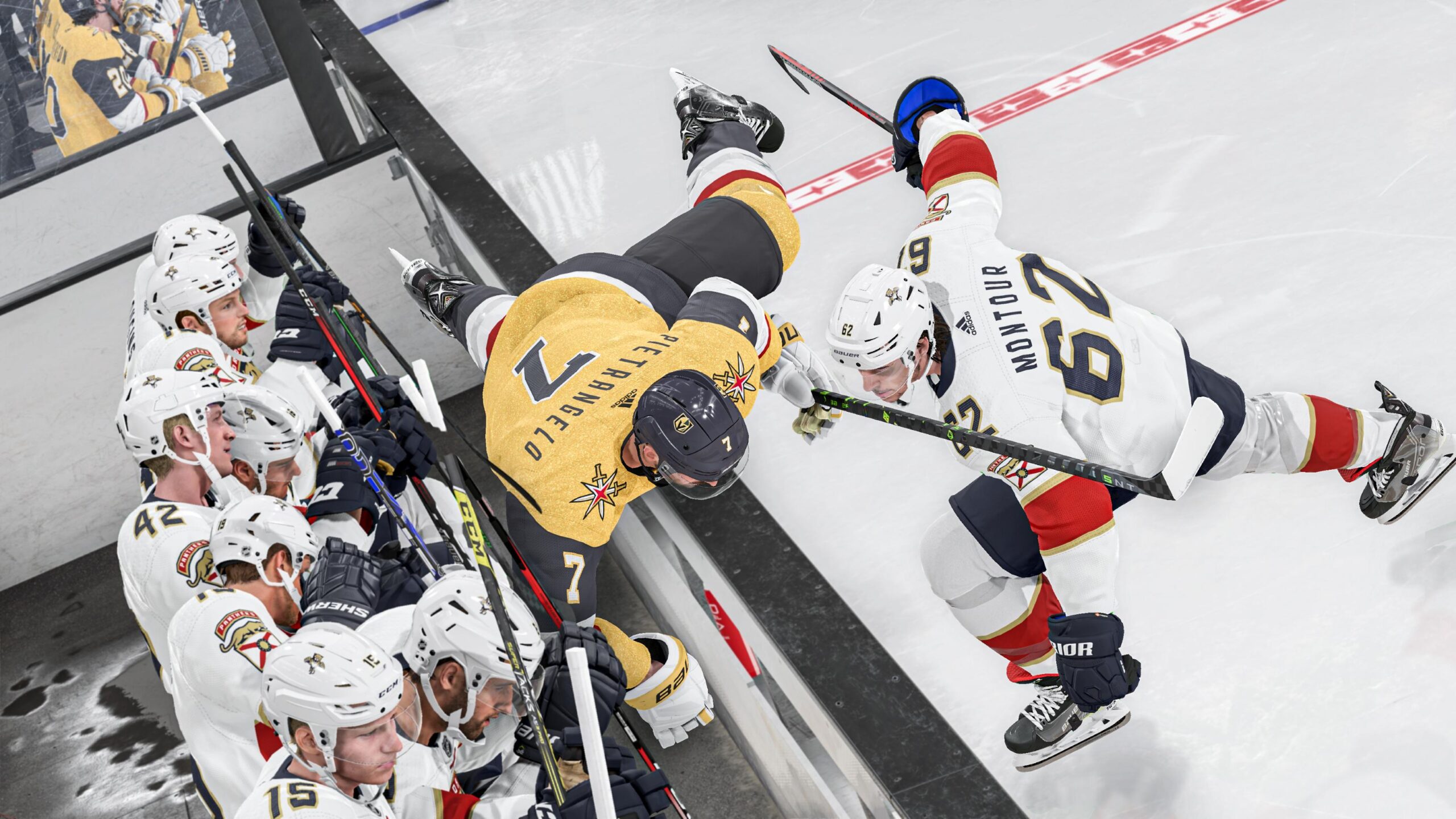

Mobile hockey games have spent years improving shooting, skating and puck control, but passing is becoming one of the areas where deeper gameplay can make the biggest difference. A successful pass is no longer simply a matter of tapping a teammate and watching the puck travel directly to them. More games are beginning to consider positioning, defensive pressure, player movement and the space available between the passer and receiver.
This changes the way matches are played. Instead of constantly pushing toward the goal with the player carrying the puck, players have to look at the ice as a network of temporary passing routes. Some lanes remain open for only a second, while others disappear as defenders move into position. Reading those spaces can become as important as choosing the right shot.
Passing Is Becoming a Decision Rather Than an Automatic Action
Simpler hockey games often make passing extremely forgiving. The game identifies a nearby teammate, corrects the direction automatically and sends the puck toward the target. That works well for accessibility, but it can also make possession predictable.
More advanced systems introduce uncertainty without making the controls unnecessarily complicated. A pass through open ice may arrive cleanly, while the same pass attempted through a crowded central lane can be intercepted. The player still uses a simple input, but the result depends more heavily on what is happening around the puck.
Several factors can influence whether a passing lane is safe:
- distance between the passer and receiver;
- position and movement of nearby defenders;
- skating direction of the receiving player;
- speed of the puck;
- angle between both players;
- available open ice;
- pressure on the player making the pass.
Together, these details create a stronger connection between positioning and possession.
Movement Without the Puck Starts to Matter
Better passing systems also make teammates more important when they do not have possession. A player skating into an open area can create a useful passing option even if they never receive the puck.
This gives developers another way to make team AI feel more natural. Instead of every teammate following fixed routes, players can react to open ice, defensive positioning and the location of the puck carrier. One forward might move toward the boards to provide a safe outlet while another cuts through the middle looking for a more aggressive pass. The result is a match that feels less like several individual players moving independently and more like a team reacting to the same situation.
Different Passing Lanes Create Different Levels of Risk
Not every open teammate represents the same opportunity. Passing toward the boards is often safer than sending the puck through the middle of several defenders, but the safer option may not create an immediate scoring chance.
That risk-reward relationship gives passing more tactical value.
| Passing situation | Typical risk | Possible advantage |
|---|---|---|
| Short pass along the boards | Low | Maintains possession |
| Cross-ice pass | Medium | Quickly changes attacking side |
| Pass through the slot | High | Can create an immediate scoring chance |
| Backward pass | Low to medium | Resets the attack |
| Pass behind defenders | High | Can create a breakaway opportunity |
The important change is that players are encouraged to think about more than simply whether a teammate is available. They also have to consider what happens if the pass fails.
Defensive AI Can React More Naturally
Passing lanes are not only an offensive mechanic. They also give defensive AI more meaningful responsibilities. A defender does not always need to chase the player carrying the puck. Sometimes the better defensive decision is to remain between two attackers and remove the easiest passing route. This type of positioning can make defensive players feel considerably smarter without giving them unrealistic speed or perfect tackling abilities.
It can also create more varied situations. If a defender blocks the central lane, the player may move the puck toward the boards. If another defender pressures that side, a backward pass might become the safer choice. The defense influences the attack simply by occupying useful areas of the ice.
Passing Can Add Depth Without Adding More Buttons
Mobile sports games face an obvious control limitation. Developers cannot continually add more buttons every time they introduce a new mechanic. Too many inputs can quickly cover the screen and make the game difficult to play.
Passing lane systems avoid much of this problem because most of their complexity happens underneath the existing controls. Players may still tap or swipe to pass, but positioning changes how effective that action becomes.
A relatively simple control system can therefore support several layers of decision-making:
- identify an available teammate;
- check whether the lane is open;
- consider where defenders are moving;
- decide whether the potential reward justifies the risk;
- release the puck before the opening disappears.
The mechanical action remains easy to understand, while the tactical decision becomes deeper.
Mistakes Become Easier to Understand
Good sports game design also needs readable mistakes. If a pass is intercepted because the game randomly decided it should fail, players are likely to feel frustrated. If a defender clearly moved into the lane before the puck arrived, the same turnover feels much more understandable.
Visible passing lanes help create this clarity. Players can often recognize what went wrong immediately. They passed too late, tried to force the puck through traffic or failed to notice a defender moving across the route. That makes failure useful. Instead of simply trying the same action again, players can adjust their positioning on the next possession.
Passing Can Change the Rhythm of a Match
When carrying the puck is always the strongest strategy, mobile hockey can become repetitive. Players skate directly toward goal, attempt a shot and repeat the process after possession changes.
Stronger passing mechanics break that rhythm. Possession can move sideways, backward and across the ice before an attack develops. Some sequences become quick combinations between several players, while others involve holding possession until a defender leaves an opening.
This naturally creates variation without relying on scripted events. The same rink and teams can produce very different attacking sequences depending on where passing opportunities appear.
What Developers Have to Balance
Passing systems can easily become frustrating if interceptions happen too frequently or teammates fail to move into useful positions. Developers therefore have to balance realism with the speed expected from mobile games.
The most effective systems usually avoid making every risky pass impossible. Difficult passes should still work occasionally, particularly when the timing and positioning are good. At the same time, consistently passing directly through defenders should carry consequences.
Developers also need to make available options easy to read on a small display. Player movement, subtle indicators and clear spacing can communicate far more effectively than filling the screen with arrows and tactical overlays.
Passing Is Becoming Part of the Skill Gap
Shot timing and puck handling remain obvious ways to separate experienced players from beginners, but passing awareness introduces another type of skill. It rewards players who notice movement several moments before a scoring opportunity appears.
A strong player may recognize that a teammate is about to enter open space and release the puck early. Another player might hold possession for slightly too long and watch the same lane disappear. These are small decisions, but repeated throughout a match they can determine who controls possession and who spends most of the game chasing the puck.
A More Team-Oriented Direction for Mobile Hockey
Passing lane awareness gives mobile hockey games a way to become more strategic without abandoning quick controls or short matches. It makes teammate positioning relevant, gives defensive AI more meaningful behaviour and creates understandable consequences for poor decisions.
As these systems improve, successful attacks may depend less on repeatedly finding the strongest individual move and more on recognizing where the next piece of open ice will appear. That is a subtle change, but it can make mobile hockey feel considerably closer to a flowing team sport rather than a sequence of isolated actions.