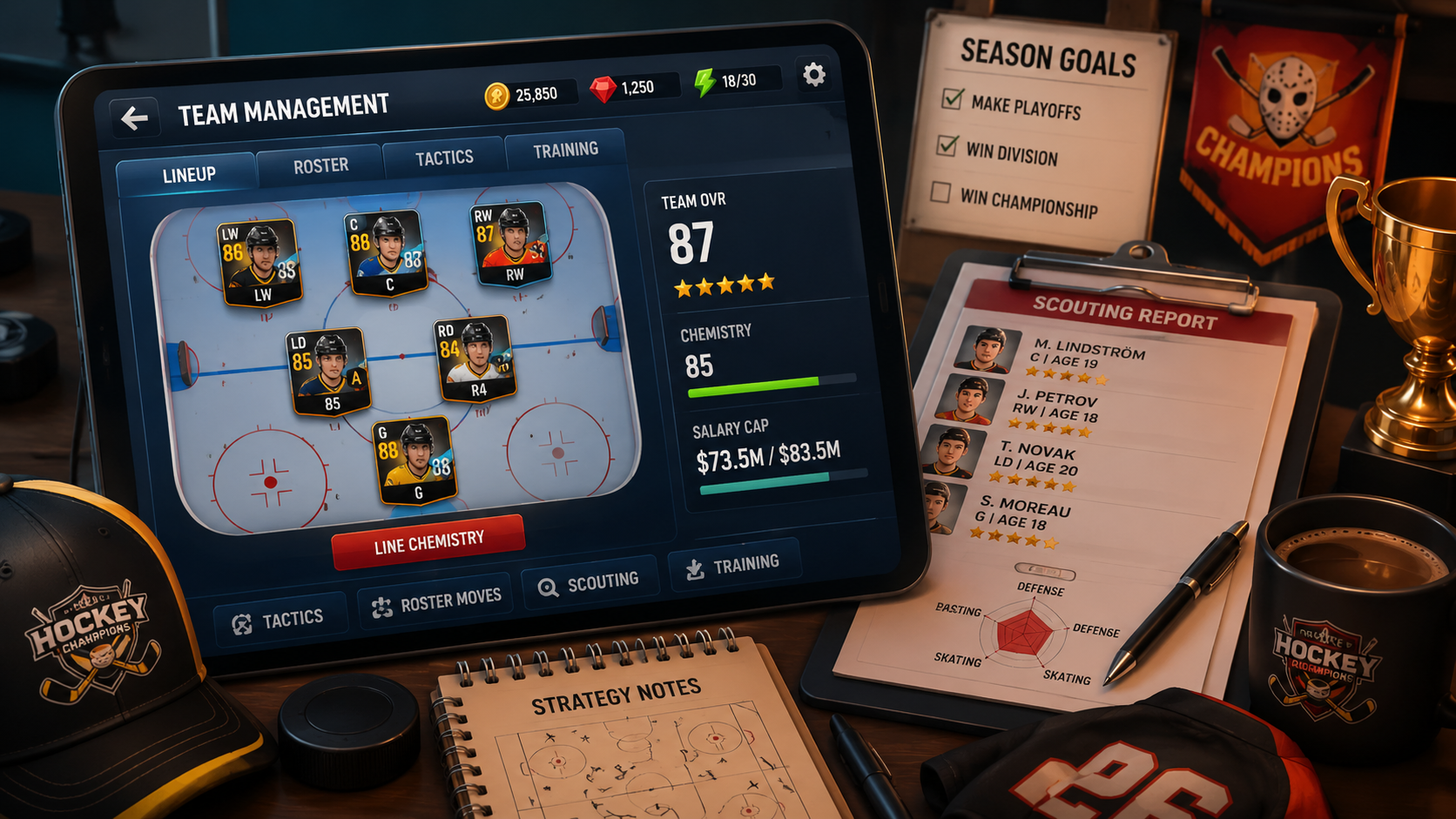
Mobile hockey games have traditionally focused on fast-paced action, quick matches, and simple progression systems. Players could jump into a game, score goals, unlock rewards, and move on. However, a noticeable shift is taking place across the genre in 2026. More developers are adding team management features that give players greater control over what happens off the ice as well as on it.
From roster building and player development to strategic decision-making and franchise-style systems, modern hockey games are becoming much more than match simulators. Players increasingly want to feel like coaches, managers, and general managers rather than simply controlling athletes during games.
The Evolution of Mobile Hockey Games
The earliest mobile hockey titles focused almost entirely on gameplay. Limited hardware capabilities and shorter mobile gaming sessions encouraged developers to prioritize accessibility over depth. Today’s smartphones are significantly more powerful, allowing developers to create more complex systems without sacrificing performance. As a result, mobile hockey games can now support features once found mainly in console sports franchises.
The evolution can be seen clearly:
| Earlier Mobile Hockey Games | Modern Mobile Hockey Games |
|---|---|
| Quick exhibition matches | Full season modes |
| Basic player upgrades | Detailed player development |
| Limited customization | Advanced roster management |
| Individual progression | Team-wide strategy systems |
| Arcade focus | Hybrid arcade-management gameplay |
Why Players Want More Control
Many hockey fans enjoy the sport beyond the action that takes place during games. They follow trades, draft picks, salary decisions, coaching changes, and prospect development. Developers have recognized that players want to experience these aspects within games as well.
Modern players often enjoy:
- Building their ideal roster
- Managing player growth
- Making transfer decisions
- Creating long-term strategies
- Developing prospects
- Balancing short-term success with future planning
These systems provide a sense of ownership that goes beyond simply winning individual matches.
Team Building Creates Long-Term Engagement
One challenge for mobile sports games has always been retention. While gameplay can be exciting, players may eventually lose interest if every session feels similar. Team management introduces long-term goals that keep players invested.
Examples include:
- Developing young players over multiple seasons
- Improving team chemistry
- Completing roster objectives
- Rebuilding struggling franchises
- Creating championship-caliber lineups
These objectives give players reasons to return regularly, even when they are not actively competing in matches.
Player Development Is Becoming More Important
Many newer hockey games now feature progression systems that allow athletes to improve over time. Instead of simply unlocking stronger players, users can influence development through training programs, coaching decisions, and game performance.
Popular development features include:
| Development System | Purpose |
|---|---|
| Skill training | Improve specific attributes |
| Experience progression | Reward active play |
| Coaching bonuses | Boost growth rates |
| Special abilities | Create unique player identities |
| Position specialization | Enhance tactical flexibility |
These systems make every roster feel more personal and unique.
Franchise Modes Fit Mobile Gaming Better Than Ever
Franchise-style gameplay was once considered too complex for mobile platforms. That assumption is rapidly changing. Today’s players are comfortable managing detailed systems on smartphones, especially as interfaces become more intuitive. Many users spend significant time planning strategies, making lineup adjustments, and evaluating players between matches.
As a result, developers are creating franchise experiences that combine:
- Match simulation
- Team management
- Financial planning
- Recruitment systems
- Seasonal objectives
This creates a deeper and more rewarding gameplay loop.
Strategy Is Becoming a Competitive Advantage
In older hockey games, success often depended primarily on reflexes and gameplay skills. Team management features add another layer of competition. Players who build balanced rosters and make smart decisions may gain advantages over opponents with stronger individual players.
Important management considerations now include:
- Offensive and defensive balance
- Line combinations
- Special teams management
- Player stamina
- Injury prevention
- Team chemistry
These factors encourage more thoughtful gameplay and increase strategic depth.
What This Means for the Future
The growing popularity of team management features suggests that mobile hockey games are evolving into complete sports experiences rather than simple arcade titles.
Future games may include:
- Expanded scouting systems
- Dynamic player careers
- Trade negotiations
- League-wide management tools
- Advanced analytics dashboards
- Deeper franchise progression
As mobile hardware continues to improve, the line between mobile and console sports games will likely become even smaller.
Final Thoughts
Mobile hockey games are no longer focused solely on scoring goals and winning matches. Players increasingly want deeper control over every aspect of their teams, from roster construction to long-term development strategies.
By introducing team management systems, franchise modes, and player development mechanics, developers are creating more engaging experiences that reward planning as much as gameplay skill. In 2026, managing a successful hockey team is becoming just as important as performing well on the ice, and that trend is likely to continue shaping the future of mobile sports gaming.